Wednesday, April 08, 2026

Wikipedia Rabbit Hole: Suspicious of Outsiders Edition

My mother died six weeks ago after a long struggle against Alzheimer's disease. In my clumsy efforts to connect with her in her final days, to show my love and care, I played folk music records and I read aloud to her.

I read from the Bible, from the Book of Common Prayer, and from an oral history of our ancestors in Appalachia in the 1700s and 1800s. All these texts were handy in her bedroom, her small private space at Assisted Living, with her clothes, the last couple of pieces of her furniture, a few family photos and paintings hanging on the walls. This room was where Mom died.

The CDs and CD player, I brought with me. God knows why I didn't do it much sooner. One CD I played was by Peter Paul & Mary, with whom I am pretty familiar--I used to play this album to my daughters when they were small. Another I played was a best-of compilation of the Kingston Trio, whom I remember Mom and Dad liking way back when I was a kid. I was fuzzy on their biographical details, and curious. So I consulted Wikipedia.


I learned they got their start in the San Francisco Bay area. That two of the original members grew up in Hawaii, playing ukeleles, hearing slack-key guitars. The third grew up in San Diego, the son of a naval officer who collected records along his travels, including calypso. The San Diego guy went to Menlo College with one of the Honolulu guys, that was how the group formed. "Kingston" is a Jamaica reference.

Unlike some of the New York crowd, the Kingston Trio were not folklorists nor purists of any stripe. They chose songs they could put across to a live audience in a rousing or beguiling way. Once the performance was over, the provenance of the song didn't matter to them. They lost a lawsuit over the song "Tom Dooley," which they called Traditional on the LP credits, and maybe it was but there was a recorded version that the boys heard and went to school on, or so the court thought. The song "Scotch and Soda" was given to them by the parents of a girl from Fresno whom one of the members was dating. The group tried to discover the song's authorship, but it remains a mystery. That Fresno girl's kid brother grew up to be the great baseball pitcher Tom Seaver.  

With songs such as "Shady Grove," the Kingston Trio also dipped into the stream of "Old World ballads" preserved in Appalachia and collected by song finders such as Cecil Sharp. Mr. Sharp's researches led him to Madison County, North Carolina during the World War I years. Sharp and his assistant Maud Karpeles spent several weeks with the Wallin family.

Sharp described Mitchell Wallin as a "bad singer" and a difficult fiddler to notate due to his penchant for improvisation, but considered his visit to Wallin and Sands "fruitful."[2] Years later, Berzilla Wallin said many residents of Madison County were initially suspicious of Sharp, believing that his purpose in the area was to secretly map the region for the construction of a dam and reservoir (and thus require the evictions of hundreds of residents).[2] Others thought Sharp was a German spy. Doug Wallin later said that his grandfather, Tom Wallin— who had become a devout Baptist and disapproved of singing any songs other than hymns— threatened to disown family members if they performed for Sharp.[4] In spite of local skepticism, Madison County proved to be one of the more ballad-rich areas Sharp visited.

At first glance I found the suspicion that Sharp (an Englishman) was really a German spy to be far-fetched. But then I remembered that the nearby town of Hot Springs was the site of an enemy internment camp during WW1, so there were German speakers around who apparently were interested in assimilating into the community. The suspicion that Sharp was an agent of a malign corporation or malign government bureaucrats is not nearly so far-fetched. I'm also struck by the detail about devout Baptists hating secular music, so that singing itself became a sign of disloyalty. What a general atmosphere of suspicion seemed to exist in this county. 

It is worth noting that the entire Wallin family were descended from a man who was killed for his efforts to recruit Union support in the area during the Civil War. A long-simmering brew of violence, grief, secrecy, political passions, maybe even religious identity - all these things got expressed in a dedication to singing and passing along old songs. Among other ways, I'm sure. (Incidentally, pro-Union activities in western North Carolina are in the background of the Tom Dooley/Dula legend as well.)

Perhaps it is silly or disrespectful of me to refer to my mother's death in this essay. Maybe I should examine what I'm up to with these "rabbit hole" posts. Surely part of it is trying to find purpose in the hours I spend web-surfing, to justify myself. But I feel all of us construct meaning from scattered bits and pieces. Not always, but sometimes, I find the beginnings of a good story in these meandering trains of thought and the disparate themes I find lumped together in these "rabbit holes." 

Mom liked folk music. She grew up in Appalachia and had family roots there, including in the Carter Family's backyard, but more crucially, she was a college kid playing a ukelele and taking part in dormitory sing-alongs around 1960. Did Mom like the Carter Family or old-time ballad singing? I don't know, and I didn't think to ask her until it was too late. (The Alzheimer's, I mean. I had lots of questions in the last few years that she was unable to answer.) I know Mom liked the Kingston Trio and the Limeliters, two West Coast groups who today are viewed as somewhat cheesy. What do distinctions between cheesy, commercial, and "authentic" mean in the context of what we call American folk music, and so what?

Many people living with dementia develop a sense of isolation, even distrust. They sense that conversations are going on outside their hearing, decisions and plans are being made outside their view. Mom mostly trusted my brother and me, but I know there were times when she felt we were doing things against her wishes: selling her possessions, shuffling her off to a bleak living space. Partly due to sheer cognitive decline, and partly due to this siege mentality, basic communication became difficult. 

Mom's caregivers and fellow residents were sometimes able to break through, make a connection, just by using the words of a popular song: See you later, alligator / After a while, crocodile. Call and response.

I wanted Mom to hear my voice at the end. I wanted her to feel that she wasn't alone, that someone who knew and loved her was present. I had too many words, and no words. So I borrowed some words and rhythms, some familiar prayers and Bible verses read aloud, some folk songs played on the boom box, "If I Had a Hammer" and "Tom Dooley." Sometimes I sang along.


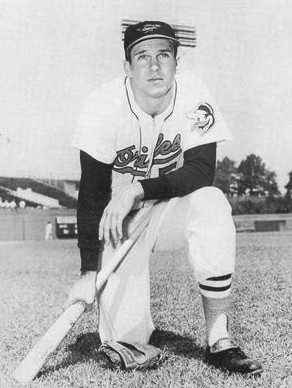
Photo: By Unknown author - Copied from The Kingston Trio website. Transferred from en.wikipedia to Commons by User:KCMO., CC BY-SA 3.0, https://commons.wikimedia.org/w/index.php?curid=15624481


Wednesday, January 21, 2026

Internet Rabbit Hole: A Bunch of College Bandits

I was reading something about far-right politics in Europe… 

Jean-Marie Le Pen died, didn’t he? Let me look it up... 

I used to know a guy named Jean-Marie; interesting name for a man. Who are other famous Jean-Maries on Wikipedia?... 

Jean-Marie Pfaff was a great Belgian goalkeeper of the 1970s, and only 5 foot 11… 

Wasn’t Shep Messing also relatively short?

That’s how I came to be reading about Shep Messing, former New York Cosmos goalkeeper whom I hadn’t thought about in many a year. His Wikipedia page linked to this 2015 piece in The Guardian, where Messing recounted his experience on the 1972 U.S. Olympic men’s soccer team.

It’s challenging to convey how impromptu and counter-cultural soccer was in this country when I was a kid. There were huge areas of the country that had never seen a soccer game. My family moved from Charleston, WV to the D.C. suburbs when I was in 3rd grade. I’d never seen or heard of soccer, then suddenly it was something the kids played during recess, thanks to crude goals set up on the school grounds, and the leadership of a boy from Mexico and another from England (a benefit of living in the salad bowl of the Washington area).

The current state of U.S. soccer, which is still way behind the Western European nations, is so far advanced in coaching and development compared to my day. We were largely on our own. In the 1970s, it was hard to find an adult who knew enough about soccer to teach us anything. Most of my coaches were competent at organization and motivation, skills they probably gained in some other sport -- but ignorant about soccer technique or strategy.

It was huge to encounter a traveling youth team from Germany or Scotland or anywhere beyond our shores. I learned more playing one game against kids my age, raised in a real football culture, than in a year of listening to my American coach. An unfortunate psychological effect, for me at least, was that the moment I heard an opposing team speaking a foreign language, or even English with a foreign accent, I felt my team was in for an ass-kicking.

But there was such freedom in this marginal status! Such relief from expectations. Our parents, even if they showed up for the games, could hardly tell what was going on, if their child was doing well or poorly. The stoners and poets and other non-conformists played soccer in 1980.

This Shep Messing interview gets at what I mean.

There was no grand master plan in US soccer back then.

“It is so hard to compare eras and generations for US soccer,” Messing said. “You’re not talking about guys who were playing in a stable, professional league. This was really amateurs. So to go to play at Azteca against Mexico and to Jamaica and Trinidad and the Central American countries, we did not have that body of experience. Our experience was, in my case, Harvard-Yale or Harvard against Columbia. We had no preparation, nothing to prepare. It was brutal. But we didn’t have any pressure. We were a bunch of college bandits.”

Picture this: Messing hitchhiked from New York to St. Louis to attend the Olympic team tryouts!

A dark note: Messing recalls that he and his track-suited teammates used to hop the fence and skip the ID check when leaving the Olympic Village.to go out on the town in Munich. Observing them was the way the PLO terrorists saw the security weaknesses, and they donned track suits and hopped the fence to get into the village.

This interview was conducted by Michael Lewis, who I gather is not the Moneyball/Liar’s Poker guy, but oh my goodness, he has written a lot about U.S. soccer in the 1970s. I have not yet reached the bottom of this rabbit hole…


Wednesday, November 05, 2025

Dick Cheney


I have a friend (maybe you have such a friend too) who, for many years, anytime he hears of the untimely or sad death of a decent human being, has said as his standard response: “And Dick Cheney continues to walk the earth.”

Cheney died Monday, aged 84, his unbeating Wankel engine of a heart winding down at last.

My spiritual blogfather Atrios seems haunted these days by memories of the outrage he poured out, constantly and voluminously, during the Bush-Cheney years, to depressingly little effect. Here is his short post on Dick Cheney today:

Eschaton: We Will, In Fact, Be Greeted As Liberators

Dick Cheney, liberated from life, like countless Iraqis.

In hell, being shot in the face by his friends FOREVER.

I should give Atrios the last word. Like many others today, I am stewing over the bitter irony that living through the Bush-Cheney administration seemed to me like the horrifying low point, the bottom, of American political history. Looking around at 2025, civil society wise, I often feel I would go back to 2002 in a second. Since the rise of Trump, Dick Cheney and especially Dick’s daughter Liz Cheney earned praise (mostly from Democrats) and paid a real cost (from Republicans) as advocates for an earlier iteration of the Republican Party. Many hearts long for those days when we still believed in centrism and bipartisanship. They cry out, Bring back the Bushes and the Cheneys, Karl Rove and Bill Gates and Marc Andreesen, bad as they were. Take away Trump and Bannon and Elon and Zuckerberg.

We shouldn't trust that feeling. It’s not simply that things have gotten worse since the Dubya years, but that they’ve been revealed to be worse than we ever realized. The seeds of Trumpism were there long before Bush-Cheney were elected, and all of us, leaders and followers, have just been playing our parts in the always-unfolding cosmic farce. Or something. This post is both too short and too long; I should have given Atrios the last word.

To my friend and everyone else who held up Dick Cheney as the ultimate symbol of an unjust universe: We will have to come up with a new poster child. I don’t think we’ll have any trouble.

Maybe the images of the White House literally being torn down were what sent Dick across the rainbow bridge.

I went back and searched this blog to jog my memory of what I wrote about Cheney in closer-to-real time.

The Kids Today might not know: It was widely believed, from the moment Cheney was announced as the GOP running mate in 2000, that Dick Cheney was smarter and more capable than George W. Bush, his boss. Dubya was more charismatic and gave a livelier speech, but Dick was the adult in the room and much savvier about using the levers of power, both military and bureaucratic. Starting with the fact that Cheney was an old friend of Dubya's father, Cheney loomed over Bush in an odd, unprecedented way. Dick was the most powerful VP in history, until he wasn’t, until the scandals and failures associated with the War on Terror mounted up. Subsequent VPs have been problematic in different ways. Maybe the point here is that Vice President is a strange office, poorly defined, and when we overhaul our Federal constitution,* we should get rid of it. ( *and pigs fly)

I hadn't thought much about Valerie Plame and Scooter Libby in a long time, but I thought about them a lot in 2006-7. Plame was a CIA agent, an actual weapons expert, doing important and dangerous work. But she and her husband Joseph Wilson were sharing information that contradicted what Cheney was saying about Saddam Hussein and WMDs. When the facts contradicted the ideology, the facts had to be quashed. Somebody leaked Plame's identity to collaborators in the media in 2003; she was outed, discredited, her CIA career over. Cheney's chief of staff Scooter Libby took the fall, indicted in 2005 for perjury etc. and convicted in 2007. 

Then, and maybe my outrage was misplaced, but I was infuriated by the stream of politicians and media figures who argued that Scooter Libby mustn't go to prison. He's not a street thug but a leading member of the federal tribe, doing his job. All is fair in love, war, and national-security infighting. The relationship between Bush and Cheney was strained by this time, but Bush did his part by commuting Libby's prison sentence; Libby never served a day in the clink. Few of us think about Valerie Plame (who ran for Congress in 2020 and lost) or Scooter Libby (pardoned by Trump in 2018) anymore. But to me the throughline from 2007 to today is clear. We are paying for our erasure of white-collar crime. We have allowed our standards of truth and decency to erode calamitously. We do not recognize, cannot agree on, the difference between patriotism and treason.

I was on a flight out of Minneapolis/St. Paul one day in October 2004, awaiting takeoff. The flight attendant came over the speaker, in an exasperated voice, telling us we were delayed because John Kerry's campaign plane was taking off and all other flights had to wait. (The passengers murmured their discontent.) A few minutes later, the pilot came on, saying that actually the problem was due to Dick Cheney's campaign plane. (Laughter and LOUD sounds of discontent from the passengers.) 

I learned the next day that in fact it was Kerry's plane. Was the pilot just fucking with us? Conducting a little poli sci experiment? Looking back, this incident probably caused me to overrate Kerry's chances and heightened my eventual disappointment. The fliers of Northwest Airlines that day were not a good proxy for the American voting populace.

Why the laughter, though? We were predisposed to believe it. Of course it was Dick Cheney: jumping the line, inconveniencing us lowly coach passengers, and lying about it to deflect blame. Bullying, arrogance, disinformation: hallmarks of the career of Dick Cheney.


Friday, June 06, 2025

Internet Rabbit Holes: More Steph Curry and Other Gym Rats

I was just listening to the sports podcast The Distraction, which mentioned Tommy Craggs, a writer I like and haven’t bumped into in a long while. Which led me to Craggs’s personal website, which led me to a piece he wrote in 2009 about my hero Steph Curry – a lovely little piece that nicely captures what Steph was at that moment. I don’t remember seeing this at the time it was written.

I wrote recently how remarkable and unlikely it was that Steph Curry fell through the cracks of the recruiting system to wind up at Davidson College in the first place. In 2009, the rules and norms of getting into the NCAA Tournament allowed Steph, a celebrated and charismatic player on a 26-win team, to fall through the cracks and not make it to March Madness. This was bad business all around, and proved to be an intolerable situation. It led Davidson to change its athletic conference. It led the NCAA to adopt its current jerry-rigged 68-team format. 

"Basketball hoop" by Steve A Johnson is licensed under CC BY 2.0.

Tommy Craggs aptly describes Steph Curry's special sauce on the cusp of his 21st birthday, blending the humility of an underdog with the knowing swagger of an NBA's player's son. I remembered that Lebron James made a pilgrimage to see Steph in person and size him up. I forgot about the Loyola game, when Loyola double-teamed Steph for 94 feet and he responded by standing in the corner and letting his teammates play 4 on 3. 

What Craggs doesn’t say is that we’ll be seeing Steph Curry in the NBA next year, because at that moment, nobody was sure that we would. (A Deadspin headline at the time: "Is This The End of Stephen Curry?") I for one was relieved when Steph got drafted in the first round in '09 – I was paying close attention, and I wasn’t sure that was going to happen until close to draft day.

Steph is a magician with the ball – a great pure shooter with a great handle. This is a type of player that often doesn’t achieve superstar stature in the NBA. Craggs names several Steph Curry comps. Pete Maravich was the best of the type, and Pete was an All-Star and a scoring champion, but played mostly on losing teams and never sniffed an NBA Finals.

The story of Mahmoud Abdul-Rauf, born Chris Jackson, saddens me. His peers speak of Abdul-Rauf with awe, but like Maravich, his teams made only a small dent in the playoffs. His impact was marginal enough that he was vulnerable to getting blackballed for his religion and his politics. Colin Kaepernick could be described in similar terms.

Craggs’s anecdote about Rick Mount at the basketball camp reminded me: At my one basketball camp experience we attended a talk and ball-handling exhibition by Austin Lehmann. He was a former college player, too small for the pros, but for years he scratched out a living putting on clinics like this for kids, often accompanied by his older brother George. Austin Lehmann became an elementary school gym teacher who made the news for sinking (and documenting) 1 million free throws.  

There is a place in basketball for the gym rat, the solitary crank - for kids, be they stubborn or lonely or obsessive, who just like to practice their shooting. 

Wednesday, May 21, 2025

Steph As Comedian


With Steph Curry sidelined due to a hamstring injury, the Golden State Warriors bombed out of the NBA playoffs the other day. Curry being 37 years old, his chances to grab another brass ring may have run out. Patrick Redford took this occasion to publish a lovely piece at Defector about Steph.


Redford points us to a highlight video of Steph dissecting the Houston Rockets in the Warriors’ first-round series. In his signature fashion, Curry mixes impossibly long 3-point jumpers with tantalizing floaters that are enabled by the threat of the long 3’s.

That is rude, ingenious, and above all funny. An important thing about Steph Curry: He is foremost a comedian. His possessions have the structure of a joke, with setups, misdirections, and punchlines. 

This is the beautiful observation I want to bookmark: Steph-as-comedian.

I can add, for anyone who needs reminding, that Steph entered the NBA from Davidson College. Come to think of it, Steph playing his college ball at Davidson is a comical twist in his story. Davidson was not his Plan A, to say the least. It was an absurd collective blunder by all the major college hoops powers to allow Steph to wind up in the Southern Conference hinterlands. Somehow Plan B worked.

It is difficult to describe how Davidson people feel at having Steph Curry come into our lives and being entitled to root for him. We never dreamed our school would produce a world-famous sports star. And then to have him be such a fine person and loyal advocate for the school—it’s too much. We love Steph, and, amazingly, he loves us back, for giving him a longshot chance. Davidson’s love for Steph has the quality of unbidden laughter, of being surprised by joy.

Redford goes on:

As he explained in Court of Gold, Netflix's Olympic basketball documentary, the sense of freedom [Curry] plays with is only possible because he's made his peace with losing. He seems like someone who loves winning more than he hates losing, the opposite of how Michael Jordan and his sour peers ordered things and probably different from how his eternal foil, LeBron James, relates to losing.

Last year I wrote about Jerry West that he was more characterized by the hatred of losing than the love of winning. His playing career resembled a grim crusade, piling wounds upon indignities in pursuit of validation. West finally earned that moment of glory and seeming redemption, but did it truly redeem all the sour years?

Steph is different. He’s been doubted so many times during his career as being too small, too injury-prone, not a true point guard, and more. People seem to have forgotten that he was The Underdog for so long, and the essence of being The Underdog is that the possibility if not likelihood of losing is ever-present. Steph Curry is sublimely conscious of the unlikeliness of his own story--even now, when so many others have forgotten it and treat the Warriors like a presumptive Finals contender. Unburdened by outside expectations (although they are there), Steph is free to accept joy when and where he finds it. It’s all gravy.

 Photo by Keith Allison via Flicker and Wikimedia Commons. CC-BY-SA 4.0

Saturday, May 10, 2025

Internet Rabbit Holes: Grudging Respect Edition

Chet Lemon died the other day; he was a very good major league outfielder during my youth and young adulthood, and was the center fielder on the 1984 world champion Detroit Tigers team. I re-read what Bill James said about Lemon in his New Historical Baseball Abstract: a player with some valuable qualities, notably defense and the ability to get on base, along with some flaws. Chet was good enough to hold down a starting job in the American League for 14+ years. This makes him the 48th best center fielder of all time in Bill James's book. 

An aside: A lot gets said and written about multi-championship sports dynasties, the Jordan-era Bulls or the Brady-era Patriots. Some of my favorite sports stories are of teams that hang around on the fringes of greatness for a number of years, and are only able to get it together for one season, break through and win a title. The '84 Tigers are a great example. They were a juggernaut for that one year; I think they started the season 35-5, and their winning the World Series became a default assumption which they made good on. That team had two (borderline) Hall of Fame players, Alan Trammell and Jack Morris. Around these two perennial stars were several other tenured members who were good but flawed: Lance Parrish, Willie Hernandez, Chet Lemon, Kirk Gibson. In 1984, everything went right; the strengths were accented, the flaws were obscured. The team cohered, everyone stayed healthy and sharp, and they steamrolled all comers. That is a more inspiring and relatable story than anything involving the Yankees. Here, incidentally, is a 1985 LA Times column about all the things that went wrong on the field for the Tigers that after-year. We learn that Chet Lemon inspired Lou Whitaker to join the Jehovah's Witnesses.

Anyway, the rabbit hole I followed started with the news about Chet Lemon, then my turning to Bill James to read about him. I then Googled "bill james new historical baseball abstract," I guess in hopes that the full text of it is available online. Answer: no, not for free. The links that popped up included some reviews of the Abstract, including one by Dan McLaughlin, aka The Baseball Crank, with whom I was vaguely familiar: he is a conservative pundit of the type I normally avoid. 

So I investigated Mr. Crank a bit. I was reminded that nerds-writing-about-baseball is a niche populated by quite a few conservative pundits: some decent writers like George Will, some hacks like Rich Lowry and Michael Brendan Dougherty. A vaguely disturbing realization for this nerd-writing-about-baseball. Yet Dan McLaughlin writes clearly and sensibly on aspects of baseball that are right up my alley. I feel I need to bookmark this piece about baseball's winningest pitchers, counting games won in the minor leagues and Negro leagues as well as the AL and NL. I also ran across McLaughlin's recent comment on the newly-elected Pope, an even-handed plea to conservatives, Catholic and otherwise, to give Leo XIV a chance.

Why the conservative-baseball axis? Off the top: Baseball history is steeped in traditionalism and nostalgia and American exceptionalism. It is also a protected space for talking about race. In my brief survey of his work I find McLaughlin making admiring references to Jackie Robinson and Moses Fleetwood Walker, Satchel Paige and Don Newcombe. To say these men were worthy players who faced injustice are broadly uncontroversial positions, yet they are an implied rebuke to the anti-woke philistinism of the Trumpers. Moreover, baseball seems to be an approved lighter-side to break up the relentless culture war fighting and ideological boundary-policing that right-wing punditry requires. If anyone ever needed an afternoon off in the bleachers, it's guys like NRO writers.


Sunday, February 09, 2025

Superb Owl


It’s been 16 years – time for a Super Bowl post. I don’t watch much football in recent years, but I generally succumb to the NFL conference championships and the Super Bowl.

I also make exceptions for getting together with my father to watch the West Virginia Mountaineers, despite the travesty of WVU joining the Big 12 Conference, which turned out to be one of the early signposts along college sports’ highway to hell.

In 2019 I watched Jalen Hurts, as quarterback at Oklahoma, comprehensively take apart the West Virginia defense. He did it with his legs and he did it with his arm. I gather a big goal of Hurts’s 5th year season at Oklahoma was to demonstrate that he had the arm to be an NFL quarterback. Goal accomplished. The memory of Hurts’s dominance in that game stayed with me, and I’ve halfway kept an eye on him since. 


Pro football is different than college football, and it doesn’t shock me when a great college football player turns out not to be the right fit for the NFL. But I really enjoy watching a quarterback use his legs. I hate the notion that every team needs a big strong pocket passer – a view that is less universal, but far from dead; a Carson Wentz still gets more love from Mel Kiper and more chances to win a starting job than a Jalen Hurts. Also, it raises my hackles every time a young black QB comes along and has a ton of nay-sayers, including ones who urge a position change, usually to receiver or safety. Hey, the 1960s called and wants its take back.

These things bias me in favor of Lamar Jackson and Jalen Hurts (and now “too skinny” Jayden Daniels. The pundits seemed to be trying to exile him to Canada). I hope each of them gets to lift the Lombardi Trophy before they are done. People sneer a bit at Hurts because he doesn’t throw the artistic deep ball that some other QBs throw. He’s a football player, he wins with his legs and his toughness and his improvisational gifts. He may have trouble making All-Pro rosters or winning MVPs because his individual stats may not dazzle. A QB like that can steal a Super Bowl now and then.

The better NFL teams and, more definitely, the great QBs of my childhood, Stabler and Staubach and Griese and Bradshaw, had distinguishable personalities. The younger crop coming along now have a more pleasing variety than the Tom Brady generation. I am ready to move on from the Mannings, from Roethlisberger, from Brady, from Aaron Rodgers.

So I can’t lose in tonight’s matchup, because Patrick Mahomes is unique and wonderful in his own right. I’ve admired Mahomes, still just age 29, for many of the same reasons I admire Hurts. He was somewhat unsung coming out of college, and he was never a mechanically perfect automaton in the pocket. I love his improvisations, with his legs and with unorthodox throws, backhanded and left-handed and falling down and what have you. I also admire Andy Reid, who’s claimed his due respect later in his career. For the longest time he was viewed as a second-tier head coach, fatally flawed in his game management skills – good enough to get you to the playoffs, maybe even to the Super Bowl, but never good enough to win it.

But I think I’d like to see Hurts take the trophy from Mahomes, and for Nick Sirianni to answer his detractors the way Andy Reid has.


Tuesday, October 01, 2024

RIP Pete Rose


Pete Rose died yesterday. 

I wrote about Rose in 2004, and that post is a good statement of my "history" with him. He had just published his autobiography titled My Prison Without Bars. I wrote this after I picked the book up, at a library I think, and then put it down in disgust after a chapter or two. I should have known from the book title how self-important and self-serving it would be. 

HBO put out a Pete Rose documentary earlier this year, and I watched most of it. Some gleanings: 

Rose was a really good schoolboy football player, but he was not the college type, to put it lightly, so for him, baseball was where the money was. 

The city of Cincinnati loved him, he was a true child of that place. 

Many of his teammates revere him today, notably Mike Schmidt, a Dayton, OH native who'd grown up loving Pete, and whose playing career took a step forward after Rose joined Schmidt in Philadelphia. 

Some old teammates, like Johnny Bench, do not revere him. 

Watching the film, I became desensitized, almost forgiving, of the gambling charges. Pete refers to them constantly, often jokingly, and after all, pro sports is more and more in bed with online gambling. The film takes a sour turn after a woman makes news with statements that Rose had a sexual relationship with her when she was underage. Rose does not refute the statements, but rationalizes his behavior, said he didn't know her age, she wasn't harmed, and on like that. Pretty much like with the gambling charges.

Up to the last few years, Rose had a lawyer meeting with Major League Baseball, trying to get his eligibility restored. Which is not only a matter of reputation, but of income earning potential. It says a lot, though, about the size of his achievements and his personality that the case was always open for debate. He never exhausted his appeals.

Pete made a tidy sum of money traveling to card shows and signing autographs. Was it as sumptuous a lifestyle as he could have lived if he'd made the Hall of Fame and was not persona non grata with official baseball? No. Then again, Pete Rose was not the retiring, dignified-old-age type. He hustled.


Monday, August 05, 2024

Jerry West: Not A Plumber


Born in 1938, Jerry West grew up in Chelyan, West Virginia, in a dysfunctional family within a hard-bitten coal mining community. Young Jerry developed a knack and a liking for basketball. He received encouragement and good instruction and began climbing a ladder. West's high school team were state champions. Many colleges recruited him, and he elected to stay in-state and attend West Virginia University. He became the biggest star before or since in a then-rising WVU program. In West's junior year the Mountaineers were NCAA runners-up, probably the biggest sports achievement in the school's or state's history. West won a gold medal with USA Basketball at the 1960 Olympic Games, then went on to a long and celebrated career in the NBA. He didn't completely leave West Virginia behind--he kept a summer home there and did a lot behind the scenes to support WVU--but that bouncing ball led him around the world and to levels of success that boy in Chelyan couldn't have imagined. 

Being born and raised in West Virginia has never been the easiest thing, but there were rays of hope in the post-WW2 years. The U.S. economy was riding high, the coal industry was fueling it, and the labor movement gave coal miners more power and agency, a better claim to middle-class status and the American dream, than at any other time. Jerry West represents that post-war moment. (Even though he left the state to pursue success; many others did too.) My father, born in 1939 and raised in somewhat similar circumstances, who attended WVU one year behind Jerry, utterly revered him. My whole family, and the whole state as far as I can tell, felt much the same; I never remember hearing anyone speak a word against Jerry West. 

Drafted by the Los Angeles Lakers in 1960, West entered the NBA at the same time as his great rival Oscar Robertson. The two of them changed the sport dramatically. No one playing the guard position had ever scored like them, either in sheer number of points or in efficiency. West and Robertson made great advances in the mid-range game, in the ways for a player to create his own shot within the flow of play.

In his playing career West was frustrated for many years, coming close to a league championship but repeatedly falling just short. He's more associated with losing in the Finals six times than with finally winning in 1972. That's unfortunate, but it fits West's personality--he dreaded failure even more than he hungered for success. The 1972 Lakers team was one of the very greatest ever. Assembled through trades, it was a brilliant job of blending star players and their egos. 

Along the way West became not only a brilliant practitioner of the NBA game but a brilliant student and observer of it, including the psychology, the care and feeding of egos. After retiring as a player, West took a short unhappy turn as the Lakers' head coach before finding a niche as a front-office executive, where he would engineer great trades and win many more titles. All told, he would spend 40 years associated with the Lakers.

In the end, a rift grew between West and the Laker organization. One thing about Jerry West: he never forgot a defeat or a slight. The last couple of years of his life were marked by his protests against media portrayals of himself or public comments about his generation of ballplayers. (On his podcast a while back, J.J. Redick dismissed early NBA players, of West's era and before, as "cabdrivers and plumbers." Some of those old-timers did have day jobs, of course, in the offseason, by financial necessity, in the long collective effort of building the NBA into the juggernaut that now pays J.J. Redick so handsomely. Here is West venting his fury on Redick as well as a piece of gum .) 

A digression: In my family's lore there is an episode in which my father introduced my mother to Jerry West, and I've spent a little time trying to nail it down. I assumed this happened on WVU campus while Mom and Dad were dating, but instead it was 10 years into their marriage. It was at an NBA game in 1973, the Lakers visiting the Baltimore Bullets. Apparently my eight-year-old self was there, but I have no memory of it, certainly not of meeting Jerry West. All Mom remembers is being star-struck; it sounds like an occasion for Dad to flex a little bit, to impress his girl by rubbing shoulders with a star. 

Jerry West died on June 12. Twelve days later, amid some controversy, J.J. Redick was named the head coach of the Lakers. 


Tuesday, April 16, 2024

Wikipedia Rabbit Holes: Psychedelic Spooks Edition

This summary is not available. Please click here to view the post.

Saturday, April 13, 2024

Wikipedia Rabbit Holes: Double Entendre Nicknames Edition

 From the Wikipedia page of Tommy Baldwin, journeyman English football player:


It was thought that Baldwin was known as 'the sponge' for his ability, under pressure, to hold the ball and shield it skilfully from opponents while seeking an opening to set up an attack, but according to his interview on The Chelsea Special podcast, it was because of his ability to soak up alcohol while in the pub with his teammates.

Tuesday, November 28, 2023

Washington Nationals, Nationals Park

By AgnosticPreachersKid (CC 4.0)

SATURDAY, JULY 22: The Washington Nationals downed the San Francisco Giants, 10-1, at Nationals Park in Southeast Washington. Angela and I were there, lower deck, first base side. Josiah Gray pitched seven strong innings to record the win for the Nats, and shortstop C.J. Abrams contributed a home run.

We made this trip mostly to cap off our Year of Live Baseball, to mark the end of our tour of minor league ballparks with a visit to The Show. Angela gave me the choice of city and team. I asked to go to Washington and see the Nats, feeling that it was a loose end that needed tying up. My years as a Little League player and my early years as a fan were spent in the Virginia suburbs of Washington - Vienna, to be exact. But my family's arrival in the D.C. area coincided exactly with the demise of Washington's major league team, the Senators, who decamped to become the Texas Rangers. I became a fan of the Baltimore Orioles, just up the road, which was no hardship (the Orioles were consistently strong in the 1970s). But it would have been nice to have a baseball team in the District to root for. And I had never been to a Nationals game since their arrival in 2005. And I was overdue for a visit to Washington, a city I have a lot of love and nostalgia for.

The Nationals were born in 1969 as the Montreal Expos. Over 30-odd seasons, the Expos boasted some elite playing talent: Gary Carter, Andre Dawson, Tim Raines, Vladimir Guerrero. But they were also burdened with home parks that were ill-suited to major league baseball (Jarry Park might've been fine for the minors; Olympic Stadium was miserable for any purpose) and a shaky financial base overall. 

Meanwhile, however you might feel about it, Metro D.C. boomed between 1971 and 2005, in both raw population and disposable dollars. After multiple rumors over the years of the Expos' leaving Montreal and of Washington getting a new team, when the news broke that the Expos were heading to D.C., it seemed okay, with a whiff of inevitability. Unlike most franchise moves, I didn't hate this one.

The new Washington club would not keep the name Expos (or the garish uniforms; I'm not sure they ever throw back for those). But they would also not revive the name Senators. Notwithstanding the Hall of Fame pitching career of Walter Johnson, culminating in one World Series victory in 1924, the Senators had often been a punchline: "First in war, first in peace, last in the American League." Plus, the actual United States Senate had seen its reputation suffer. Nationals or Nats had been the informal alt-identity of the Senators. To combine it with the classic script lettering of the latter-day Senators of  the '60s -- that's pretty good branding, in my book.

The Nationals built the quality of the team gradually, first through the draft and farm system, then a burst of free-agent spending, which paid off in 2019 with a World Series title. Frustratingly, however, this success could not be sustained: the Nats couldn't meet the salary requirements to keep most of its best players. (Sadly, in August, we learned that Nats pitcher Stephen Strasburg is retiring at age 35. Strasburg led the team to glory in 2019 but has barely pitched since then due to nerve damage in his elbow. He was the one player the front office signed to a max contract.)

In the alternating boom-and-bust manner of many U.S sports franchises now, the Nationals now rely on young, cheap talent. Take the two young stars of the 7/22 game for the Nats. Josiah Gray was the Nats' representative on the All-Star team this year. C.J. Abrams was having a Bobblehead Day the day we were at the park. Crucially, each of them is on a bargain salary, in the $700,000 neighborhood. When the Nats mature and become contenders again, will the financial will be there to make another run? Flags fly forever, it is said, but do earnings reports know the meaning of forever?

Anyway, it was a nice weekend. In a novel move for us, we rode Amtrak from Raleigh to Washington's Union Station. Our hotel was a walkable distance from the ballpark, and close to a Metro rail station. So it was a car-free weekend, and our Saturday jaunts (to the Smithsonian and to visit a friend in far NW D.C.) were easily manageable via Metro. 

Nationals Field, which debuted in 2008, gets high marks. I'm in the bag for any newish ballpark with a grass playing surface and bars and restaurants within walking distance. Much of Southeast Washington near the Anacostia River is newly developed; I have no childhood memory of this part of the city, because no tourists would linger there in those years. The park's playing dimensions are pretty symmetrical and not unusual. The designers did throw in a funny angle in the outfield fence in center field, just for the sake of local color.

We ignored the city's fine-dining scene on this visit; hopefully we can rectify this oversight next time. However, I've been hearing about Ben's Chili Bowl for many years, and thought I'd like to try it... Maybe it's cheating, but when I learned Ben's has a stand at Nationals Park, I figured I would check off that box at the game. The half-smoke with chili, falling apart in my hands, was good. 

Side note about the game and my sense of mortality: As a kid playing Little League ball in Vienna, I owned a Carl Yastrzemski autograph model fielder's glove. The Giants' starting left fielder in this game was Michael Yastrzemski, who is (get this) Carl's grandson. His 32-year-old grandson, at that. 

Historically, Washington produced quite a few notable players and other figures in the baseball industry, especially in the early decades of professionalism. 

  • Although biographical details are scant, several Black Washingtonians made an impact in Negro League baseball, including Nip Winters and Script Lee, who both pitched for the Hilldale Club in the Eastern Colored League during the 1920s.
  • Art Devlin (1879-1948) was a two-sport star at Georgetown, then played third base for John McGraw's New York Giants from 1904 to 1911. He was a brawling, hustling Irishman of the type McGraw liked. He played with three pennant winners in New York. 
  • Doc White (1879-1968), also a Georgetown man, was a quality left-handed pitcher, winning 189 big league games. He earned his nickname because he was a practicing dentist for a time. Doc pitched for the Hitless Wonders, the 1906 Chicago White Sox, and got a save and a win over the crosstown Cubs in the two concluding games of the World Series that year.
  • Lu Blue (1897-1958) - An interesting name for an interesting player. Lu was a switch-hitting first baseman without home run power but with a great ability to get on base. He came up with the Detroit Tigers in 1921 during a meh period for the club, the latter Ty Cobb years. Lu subsequently played for the St. Louis Browns and the White Sox, and was a regular for 12 years all told. He grew up in DC and returned to the area in his post-playing years. 
  • George McQuinn (1910-1970), an Arlington, VA native, was a line drive hitter and a slick-fielding first baseman. He spent most of his big-league career with the mostly bad St. Louis Browns, but capped his career as the regular 1B on the World Series champion Yankees of 1947.
  • Maury Wills (1932-2022) was the Los Angeles Dodgers' shortstop for their brilliant early-1960s run. He won two Gold Gloves and in 1962 set a single-season MLB record by stealing 104 bases. He played in four World Series and was on the winning side in three (1959, 1963, 1965). Maury graduated from Cardozo High School, not far from Nationals Park in the District.


Thursday, September 28, 2023

Brooks Robinson


Baseball great Brooks Robinson passed away on September 26th, aged 86. He was at the heart of the Baltimore Orioles teams that I loved in the 1970s, a fixture at third base, a 16-time Gold Glove winner. He remained around the team even after retirement, and became a favorite adopted son of the city of Baltimore. Brooks's national profile went way up in after his MVP performance in the 1970 World Series, with the fielding gems he crafted and which have lived on in highlight reels ever since. I think of him first as a sweet-natured down-to-earth guy. From memory I can easily cue up the sound of his voice, that high pitched Arkansas accent, from local commercials and post-game interviews. Brooks had a Walter Mitty quality, giving hope to the balding, slope-shouldered anti-phenoms of the world. He epitomized the saying that an athlete is one thing, a baseball player is something else. 

I've been looking over his numbers, and at what Bill James wrote about him in the Historical Abstract. It's possible, in light of latter-day analytics, that we (Oriole fans and others of his contemporaries) overrated Brooks somewhat: that the dazzling defensive highlight reel outshone his offensive abilities, which were good but not dazzling. He was possibly the greatest fielding third baseman who ever played. But overall, Bill James has him at number 7 on the all-time 3B rankings, and he's probably fallen a notch or two since that list was published in 2001. There were years in the heart of his career where Brooks was an average hitter, or a little worse.

Brooks led the league twice in GIDP, which is evidence that he was a slow runner. But also, he led the league four times in Sacrifice Flies (and wow, there are a lot of ex-Orioles near the top of this list). He didn't strike out much, which speaks to good strike zone judgment and bat control. He didn't have brute batting power, but I'd say he had the timing and mechanics needed to ride the ball a long way. Given Brooks's obvious defensive skill set, gained through hard work and practice and study of the game, it makes sense to me to think of his offensive skill set this way. In his career, Brooks hit 268 home runs and 114 sacrifice flies. Robin Yount is the only player with fewer HR's and more SF's (251 and 123). 

I had a memory that turns out to be apocryphal: Brooks had a sporting-goods business that got into trouble, at or near the end of his playing career. In my mind, Baltimore fans had spontaneously come forward and donated cash to help Brooks stave off bankruptcy. According to Wikipedia, this was an exaggeration (though there was public concern that Brooks would lose his house). Wikipedia also contains an anecdote that in 1976, when Earl Weaver told Brooks he was being benched in favor of young Doug DeCinces (a handsome, broad-shouldered phenom of the classic type), Brooks asked the Orioles to explore the possibility of trading him. The Chicago White Sox were interested, but would not extend Brooks's contract beyond that season. So Brooks vetoed the deal. Late in the 1977 season Brooks retired, having never worn a big-league uniform other than Baltimore's.


Photo: Jay Publishing via tradingcarddb.com, Public domain, via Wikimedia Commons

Tuesday, April 25, 2023

The Captain


Basketball Hall of Famer and two-time NBA Finals MVP Willis Reed died on March 21. 

The word "iconic" is overused, in my opinion. But it's hard to avoid it when talking about the 1970 New York Knicks, or Madison Square Garden, or "the Willis Reed Game." 

May 8, 1970 was the day of Game 7 of the NBA Finals, Los Angeles at New York. The atmosphere was heavy with anxious speculation, since Reed had suffered a bad thigh injury a few days earlier. He couldn't possibly play. Could he?

When Reed emerged from the locker room, in uniform, and limped onto the court for warm-ups, the Garden exploded in cheers. Just by showing up for duty, the Knick captain had galvanized the home crowd and transformed doomy angst into a great hope. After tip-off, on the first possession, Reed sank a jump shot. The Garden was enraptured. Second trip downcourt, same thing. By then the Knicks were flying and the Lakers were chained to the floor. Those four points were all Reed would manage, but Walt Frazier would supply 36, and the rout was on. The Knicks built a 27-point halftime lead, and cruised to the franchise's first championship.  

Ray Ratto's obituary at Defector was headlined "Willis Reed Met The Moment."

It’s as big as it is, even still, because Reed always seemed content to let it be what it was; the legend spread as legends used to, by word of mouth and images of his two jumpshots. Reed himself never really said much about it, and he didn't have to. He did the perfect thing at the perfect time when everyone was looking, and then let it speak for itself. The lasting moments are like that.
In 1971 Reed's body seriously started to break down, in a cascading series of leg injuries. This is how I remember him, as a wounded warrior, struggling bravely to summon a ghost of his former self. In this diminished state he helped the Knicks to a second NBA title in 1973.

Writing in the afterglow of the Willis Reed Game, Pete Axthelm lauded Willis as a unifying figure between downtown and uptown, between the glamorous Knicks and the grassroots basketball culture of Harlem and the outer boroughs. Reed pioneered a new style of leadership and of masculinity, in Axthelm's view. This seems a little too grandiose now. A few years later his Knick teammate Bill Bradley wrote more simply that Reed was "the dominant member... the perfect center for our team that year." 

Reed was named to the NBA's 50th and 75th anniversary teams. His career numbers are not in the same stratus as those of the very greatest centers: Russell, Chamberlain, Kareem, or Shaq. (Russell loved Willis's game, however, and Willis and the young Kareem had some phenomenal head-to-head battles in the 69-70 season, recounted by Axthelm.) Willis was a fine versatile player, a great team player, the captain of a two-time champion, an honored part of a great hoops ensemble. 

Willis was named the Finals MVP in both '70 and '73. In neither year is it obvious from the stats sheet that he was the best player in the series. Notably, in both years, the Knicks vanquished the Lakers, featuring Wilt Chamberlain as Willis's opposite number. One could call these awards to Willis a roundabout compliment to Wilt - if you beat The Man, you must be the man - but it's also a comment on each man's style of play and character. Wilt was a monumental talent but a confounding human being. Wilt's teammates always had to fit themselves around Wilt. Whereas Willis fit himself within the team, and met the moments as they came. Willis would lean on Wilt in the post, draw him away from the basket with the threat of his jump shot, act as a decoy. He didn't thrash Wilt, he outfoxed Wilt. Bill Russell is often remembered as Wilt's great foil, but Willis, even on one good leg, had his own anti-Wilt mojo. 


Friday, September 30, 2022

Charlotte Knights, Truist Stadium

Our 2022 baseball quest has reached its end. The Nashville Sounds cruised to an easy 9-1 win over the Charlotte Knights, Friday, September 9. I guess a quest is not supposed to end with the Knights losing, but I am celebrating nonetheless. Whew! 

If it isn't obvious, Angela and I chose which games to attend based on scheduling needs, not baseball criteria. The outcome of this game might have been expected, considering Nashville is in first place in their division of the International League, and Charlotte is in last place in its division. 

This year's Knights team is Class AAA's Island of Misfit Toys. Their best player is a 30-year-old, short, stocky guy churning around center field. Their right fielder looks like Adonis but strikes out too much and doesn't hustle. Their corpulent first baseman is a failed catcher. The best athletes are not good enough players, and vice versa. Maybe the White Sox will deal them a better hand next season.

What can I say about the city of Charlotte that it hasn't already said about itself? It is North Carolina's largest city, and it has the traffic and the steel-and-glass towers to go with that status. The place has grown and changed determinedly in my lifetime. In the 1980s and 90s, Charlotte elbowed its way from being a regional banking center to a national one. In the same time frame, it became a major league pro sports city, landing teams in the NBA and NFL. (Raleigh acquired an NHL hockey team, but it's a consolation prize.)

The rest of the state has a complex about Charlotte: the eldest, most successful sibling that the others have tepidly loyal but slightly resentful feelings toward. A series of politicians has thought that being mayor of Charlotte would be a springboard to higher political office, like Governor or Senator. Most of them have been disappointed. Rural voters don't like city pols in general, and voters in the other North Carolina cities just don't especially like Charlotte.

Despite its strong minor league history, North Carolina has never had an MLB team. It took some doing just to get Charlotte elevated to Class AAA status in 1993. But Charlotte has had a minor-league team almost continuously since 1901. 

The team was called the Hornets for many years. There is a disputed story about a 1775 Mecklenburg Declaration of Independence. Whatever the authenticity of this document, it is true that a British official referred to Mecklenburg County as a "hornet's nest" of rebellious sentiment. Some Charlotte people take a lot of pride in this history, and adopted the Hornets nickname for their ball team. Of course, the Charlotte NBA franchise has now claimed that nickname. 

My circa-1985 memory is that Charlotte's ballpark was tired and shabby. Truist Stadium, opened in 2014, is pristine; Angela considers it the nicest ballpark we've visited, hands-down.  As McCormick Field is surrounded by trees, Truist is surrounded by skyscrapers. It's a nice view from inside. 

Photo by JBJ

This was a special night at the ballpark for the Catholic Diocese of Charlotte. A nun threw out the first pitch; a chorus of seminarians sang "Take Me Out to the Ball Game;" the bishop said a few words via the JumboTron. All unexpected, but nice. Ballpark foods consumed: Philly cheese steak (I had it in sandwich form, Angela in nachos form) that was sinfully good. Beer enjoyed: a Hop Drop 'N Roll IPA from NoDa Brewing Company in Charlotte.

Charlotte grew up with the Southern textile manufacturing industry after the Civil War. As a banking and railroad hub, it was first among equals relative to Gastonia, Concord, Albemarle, and others. At heart, though, in its earnest boosterism, Charlotte is a big small town, the biggest mill town of them all. 

  • Huntersville native Hoyt Wilhelm (1922-2002) broke into pro ball in 1942 with the Mooresville Moors, just a few miles from home. Class D ball, unaffiliated, the lowest rung of the ladder. He entered WW2 military service for three years, then spent two more seasons in Mooresville. Big-league teams consistently doubted him: he was a knuckleball pitcher, which was unfashionable, and he got a late start due to the war. Wilhelm was a surprise success as a 29-year-old rookie reliever with the New York Giants. He bounced from team to team. But he lasted until age 49 and was an All-Star as late as age 47. He set an MLB record by pitching in 1,070 games. Wilhelm entered the Baseball Hall of Fame in 1985, capping a remarkable, sprawling career.
  • Sonny Dixon (1924-2011) has a lot in common with Hoyt Wilhelm: He broke in with his hometown team, the Charlotte Hornets, and he was slow to fledge and leave the nest. He was a right-handed pitcher, a rubber-armed innings eater.  Like Wilhelm, he spent the years 1943-45 fighting WW2. He rose through the minors slowly. Unlike Wilhelm, he had the bad luck to wind up with weak parent organizations; he broke into the bigs with the Senators and then pitched for the Athletics (Philly and KC). His final MLB stint, three appearances, was with the 1956 Yankees. Dixon pitched for the Hornets again at ages 34-35 before hanging them up. He lived most of his life in the Steele Creek community near Charlotte, and is buried there. 
  • Minnie Mendoza (b. 1933 or 1934) was born and raised in Cuba, but is an honorary Charlottean thanks to spending 10 seasons with the Charlotte Hornets when they were a Senators/Twins farm team. He was sort of a full-time utility infielder, a Billy Goodman or Tony Taylor type, about the same quality. Why he spent so long at Class AA Charlotte, I don't know--possibly for his coach/mentor qualities. He finally got his cup of coffee in the Show with Minnesota in 1970, when he was 35 (maybe 36) years old.
  • Raised in the world of mill-town baseball, Tommy Helms (b. 1941) went on to be the regular second baseman on the 1970 Cincinnati Reds, who won the NL pennant. He was a 9-year MLB regular with the Reds then the Astros. A good glove man, he enabled Pete Rose to switch from 2B to right field. Tommy's nephew Wes Helms is an ex-major league player and formerly managed the Charlotte Knights.
  • Dickie Noles (b. 1956) was a journeyman pitcher, a reliever and spot starter. He spent 16 seasons in the pros, pretty evenly divided between the minors and the majors, mostly with the Phillies and Cubs systems. He earned a World Series ring with the 1980 Phillies. Noles and Ray Durham are both alums of Harding High School in Charlotte.
  • Ray Durham (b. 1971) came up with the Chicago White Sox and later played with the A's. Giants, and Brewers. He was damn good; I had him on fantasy teams a couple of years. He had some power, stole some bases, and drew walks. He was a plus fielder at second base, at least in his younger years. Durham was named an All-Star twice (1998 and 2000), had six years of over 100 runs scored, and had a long MLB career: 1975 games, 2054 hits.
  • Alex Wood (b. 1991) is a lefty power pitcher, currently with the San Francisco Giants. He pitched in three World Series with the Dodgers, winning a ring in 2020. He was an NL All-Star in 2017, amassing a 16-3 won-loss record. He has dealt with injuries off and on since high school, but he is mighty good when healthy.


Tuesday, September 13, 2022

Asheville Tourists, McCormick Field

In their final home game of 2022, the Asheville Tourists trounced the Bowling Green Hot Rods by a 16-6 score on Sunday evening, September 4. Gray skies and intermittent drizzles were not going to stop the game nor the postgame fireworks show. Angela and I were there along with our daughters Lily and Molly.

Our love affair with Asheville and its environs continues. I grow fonder of this city every time I visit, and I have my kids to thank. Two of them matriculated at UNC-Asheville and each then stuck around for a year or more after graduation. Hannah has since moved away, but Lily is still an AVL resident. This being Labor Day weekend, we made a nice 2 1/2 day visit of it. We selected a hotel in the Biltmore Village area, which I was unfamiliar with, and spent Saturday afternoon shopping and wandering that area. Saturday dinner was at Nine Mile on Montford Avenue. Sunday afternoon we took an excursion to Cherokee and the museum there, about an hour's drive west of Asheville. Then Sunday evening we went to the ballpark. 

McCormick Field was first built in 1924. It is tucked into a hillside in a neighborhood a mile south of downtown, near Mission Hospital. This is one of my favorites among the ballparks we've visited. The park was renovated in 1991-2, replacing wooden grandstands with brick and concrete. So McCormick combines character with modern comfort. The rows of seats rise at a steep angle, and there is plenty of leg room, which was my only mild criticism of Grainger Stadium in Kinston. It was a nearly full house, incidentally, full of high spirits, with a lot of families, some gray heads and many children and youth. 

Behind the outfield fence is a ring of trees. You can see the corner of a football field looking over from a plateau beyond left-center. The distance down the right-field line is only 297', partly mitigated by the 36-foot-high fence there. But center field is only 370' and right-center 320'. It sure seems like a great place to hit. 

McCormick had a wide selection of foods for sale (though execution varied somewhat) and a deep lineup of beers on tap. Ballpark beers enjoyed were both from Asheville: the French Broad River Kolsch, and the Hi-Wire Bed of Nails brown ale


Minor league baseball first emerged in Asheville around the turn of the 20th century. For a few years the team was nicknamed the Moonshiners, then the Mountaineers. In 1915, sportswriters began to refer to the team as the Tourists. This article claims that the nickname was simply due to most of the players being from somewhere other than Asheville. Anyway, the name has stuck; in spite of a couple of efforts to rename the team, it has always reverted to being the Tourists. It's one of the most enduring brands in the sport. 

I like Tourists; it fits. It may not inspire fear or awe; it may be pedestrian like Tars or Tobs or Furnituremakers. But Asheville is about people coming and going, exploring, exchanging, perhaps daydreaming a bit. Wikipedia says that the Cherokee used it as a meeting ground. Hernando de Soto noted the presence of a settlement here. People are attracted here by the natural beauty and outdoor recreation. Two rivers have their confluence in Asheville. It became a regional railroad hub. A scion of the Vanderbilts visited Asheville, was enchanted by it, built a big home here, and transformed the city and the region. There was manufacturing here, but it has also been a center of visual arts, architecture, and music. 

Asheville was home to a Black team (i.e. part of the Negro Leagues) for a couple of years in the 1940s, although I don't have much information on them. 

Asheville has been a fixture in the South Atlantic League since 1980. The movie Bull Durham wrote the Asheville Tourists into Crash Davis's story, and used McCormick Field as a shooting location. The area produced top players a century ago, and produces its share of top players today. 

  • Ham Hyatt (1884-1963) grew up in Candler and was recruited by his uncle to enter pro ball. He was an outfielder, and is identified by baseball historian Steve Treder as the first pinch-hitting specialist in the majors. This was with the 1909 Pittsburgh Pirates, who stormed to the National League pennant. Hyatt was summoned off the bench in the first inning of Game 7 of the World Series to replace an injured regular, and played well as the Pirates clinched the world title. Although mostly a reserve in the majors, he was a star in an 11-season minor league career.
  • Cliff Melton (1912-1986) broke into pro ball with the Asheville Tourists in 1931. He made a big splash in his major league debut season, 1937, winning 20 games and helping the New York Giants win the NL pennant. He battled arm trouble in later years, and wound up winning 86 games in the majors and 136 more in the minors. 
  • Ken Holcombe (1918-2010) grew up around Asheville. His father was a furniture and cabinet maker. Right after high school Holcombe pitched for a year in the King Cotton Textile League, for the Greenville, SC club. He played 17 years as a pro, had some good years in the high minors, and pitched 99 games in the majors, scattered over six seasons. When his playing days were over, he settled in Swannanoa, raised his family, and worked as a supervisor for Beacon Manufacturing, a textile firm specializing in blankets.
  • Sammy Stewart (1954-2018), from Swannanoa, was a colorful and effective utility pitcher for the Baltimore Orioles in the late 70s and early 80s. He allowed 0 earned runs in 12 postseason innings as an Oriole. 
  • Greg Holland (b. 1985) was active with the Texas Rangers until earlier this season. A pitcher, a right-handed closer, a three-time All-Star. Holland grew up in Marion, in McDowell County, and starred at Western Carolina University. He appeared in the 2014 World Series for the Kansas City Royals, who fell in seven games to Madison Bumgarner and the Giants.
  • Cameron Maybin (b. 1987): Born and raised in Asheville, Maybin was still an active player in 2021. A fast, rangy center fielder, he was a big-league regular for about four years, and a useful MLB sub for about 10 more. He played in 3 games as a defensive sub in the 2017 World Series, for the Houston Astros. 

Photos by JBJ

Thursday, September 01, 2022

Gastonia Honey Hunters, Caromont Health Stadium

SATURDAY, AUGUST 20: In Atlantic League of Professional Baseball action, the Gastonia Honey Hunters knocked off the visiting High Point Rockers, 11-5.

Photo by JBJ

As a repeat customer I feel qualified to say, ALPB baseball is a pretty good product. The Honey Hunters are strong this year; they will be competing in the championship playoffs in September. It seemed that every guy in their line-up is sporting an OPS in the 800 to 900 range. Possibly the 304-foot left field dimension contributes to that potent offense. The Honey Hunters jumped out to an early lead, then let the Rockers get back into the game in the middle innings, before putting the hammer down to extinguish the threat. 

We have a friend here in Raleigh who is a native of Gastonia, and she briefed us prior to our trip, enthusiastically, about things to see and do. We tried to follow her advice, failed in some cases. But our visit was animated by our friend's civic pride and hope. Most of us, certainly Angela and I, know the feeling of loving a small town, seeing the best in it, the untapped potential amid or alongside the decay. 

Gastonia has its challenges, as a former textile town, like so many towns in the Carolinas. (You're close to the South Carolina border here.) Something particular to Gastonia is that Loray Mills was the site of a famous strike and episodes of union-related violence. This is a complicated legacy. 

Renewal efforts are underway in Gastonia. Loray Village is a project to re-purpose the massive red-brick mill building into apartments, retail shops, and a museum. The Esquire, where we ate breakfast on Sunday, is a boutique hotel occupying a former bank building downtown. We had post-game drinks and nachos at Pita Wheel, which was a gas station in its former life. And the Honey Hunters ballclub, its stadium, and the FUSE District represent a broad-based plan to bring sports and entertainment to the area between Loray and the downtown center.  

Photo by Upstateherd (CC 3.0)

Caromont Health Stadium is a nice ballpark in only its second year of existence. It has the wall-to-wall carpet that High Point's home park has, which I dislike, but it's well-designed for multi-sport potential, with seating close to the action. We sat immediately behind the home team dugout, which added to the fun; we felt we were part of the players' conversations. 

Photo by Milbpics (CC 4.0)

Caromont has a friendly, efficient staff, including the EMTs who dressed Angela's wound after she fell and skinned her knee while crossing the street to enter the park. This was our first significant injury of the year, but Ange was a gamer and spectated through the whole contest. 

Ballpark foods consumed included a chili dog, Cracker Jacks, and a SunDrop soda. Local beer enjoyed: an Olde Mecklenburg Copper Altbier, out of Charlotte.

The crop of big-league ballplayers from around Gastonia is impressive. I was surprised. There are a bunch of All-Stars, 20-game winners, and MVP vote getters here. Gastonia is a bigger town than I tend to realize, for one thing.

  • Jake Early (1915-1985), from Kings Mountain, was a catcher and longtime teammate of Buddy Lewis's with the Washington Senators. After leaving the Senators, Early played several more years in the minors. He had stints as a manager in Rock Hill, SC and Statesville, NC, and appeared as a pitcher for the Gastonia Rippers in 1960, aged 45.
  • Buddy Lewis (1916-2011) was an outstanding player for the Washington Senators in a career shortened by WW2 military service. Lewis served in the U.S. Army Air Corps, flying supply missions over the Himalayas. He played third base, then later right field for the Senators. After retiring as a player, he returned to Gastonia and ran an auto dealership.
  • Whitey Lockman (1926-2009) played first base and outfield for the New York Giants. He was a regular on the 1951 and 1954 pennant winning Giant teams. Lockman was born in Lowell and attended Gastonia High School. After his playing days, he coached, managed, and worked in player development for many years.
  • After a shoulder injury threatened to end his pitching career, Ted Abernathy (1933-2004) adopted an unorthodox submarine delivery. The change transformed him from a marginal starter to an excellent relief pitcher. Abernathy led the NL in saves in 1965 and 1967. He was born in Stanley, in Gaston County.
  • Jimmie Hall (b. 1938) had a sensational, almost freakish batting year as a major league rookie in 1963: 33 home runs for the Minnesota Twins, way more than he had ever hit in the minors. He had a good five-year run from '63 to '67, then fell off sharply. An outfielder, Hall was born in Mt. Holly and went to school in Belmont.
  • Lincoln County native Tony Cloninger (1940-2018) pitched 12 seasons in the National League, mostly with the Braves and the Reds. He went 24-11 for Milwaukee in 1964. He started and took the loss for Cincinnati in Game 3 of the 1970 World Series, against the Orioles. But he later collected four World Series rings as Joe Torre's bullpen coach with the Yankees. 
  • I remember Kevin Millwood (b. 1974) from my circa-2000 fantasy baseball days. Big right-handed pitcher, a good guy to draft with good fantasy "fundamentals" (HR, BB, K). He came up with the Atlanta Braves and teamed with Maddux, Smoltz, and Glavine late in their reign of dominance over the NL East. He bounced around after leaving the Braves but wound up with 169 big-league victories. Born in Gastonia, Millwood went to high school in Bessemer City.