Friday, June 24, 2022

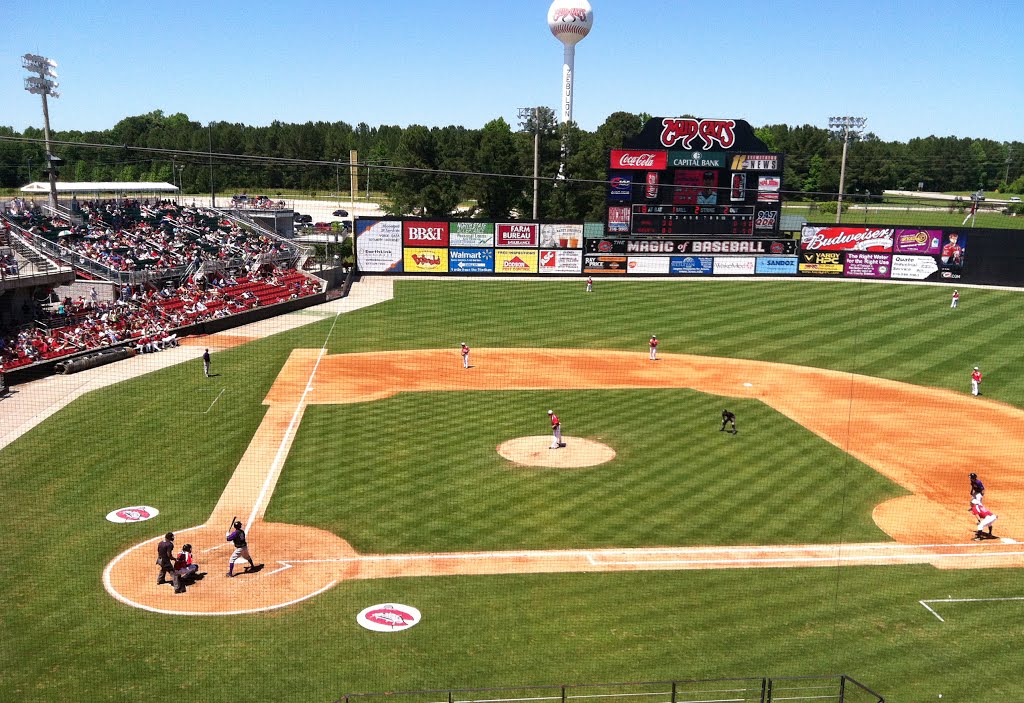
Fayetteville Woodpeckers, Segra Stadium


The Fayetteville Woodpeckers downed the Kannapolis Cannon Ballers, 4-3, on Father's Day (Sunday, June 19) in Fayetteville. In contrast with Durham's rapid shuffling of pitchers the other night, Fayetteville's starting pitcher, Edinson Batista, threw six shutout innings.

There were a couple of moments that told me we were watching a Class A game, not AAA. One was when a Kannapolis outfielder caught a long fly ball and started to jog toward the dugout before teammates yelled at him to make a throw. He must have forgotten how many outs there were. Not one but two runners tagged up to score. Given the closeness of the game, that was a big goof. 

Another was Fayetteville's second pitcher, a young man named Schroeder, who was simply the wildest pitcher I can ever remember seeing. He made it through one inning and was charged with three wild pitches, but two or three more went to the backstop, and in the scariest moment, he hit a batter on the helmet, right above his ear. The batter was okay, thankfully. Somehow only one run scored.

Angela lamented the fact that we were watching the Ballers versus the Peckers. But like the Cannon Ballers, there's some background to Fayetteville's team name too. It is tied to the red-cockaded woodpecker, an endangered species whose cause is well-known around these parts.

Segra Stadium, opened in 2019 and located on Hay Street in downtown Fayetteville, is new and nice. I liked the "see-through" fence in left field with the bullpens behind it, and I loved seeing and hearing the freight train rumbling past beyond left field. The outfield dimensions marked on the fences are 340' to left, 400' to center, 325' to right. The park holds 4,786 spectators. 

Ballpark foods sampled: a cheeseburger and fries, and a pulled-pork sandwich and hush puppies.  My ballpark beer was the Namaste Lavender Ale from Fayetteville's Gaston Brewing Company

Fayetteville sits in the Sandhills, a geological zone on the upper edge of the coastal plain, extending into South Carolina. Fayetteville has fielded a professional team off and on in various leagues since 1909. For several years the team was called the Highlanders or Scotties, referring to the Highland Scot migration to this part of the state in the 1700s. Later it used the name Generals, related to Fayetteville being the home of Fort Bragg and the U.S. Army 82nd Airborne.

  • Rube Benton (1890-1937), from Clinton, was a rounder. Someone should write a song about him. He won 150 games as a National League pitcher and 172 more in the minors. He was the losing pitcher in a famous game in the 1917 World Series. Witnesses connected Rube to game fixing during the Black Sox era, though he was never banned from organized baseball. Died in a car crash a long way from home.
  • The real Moonlight Graham (1877-1965) was born in Fayetteville. So was the real Austin Warren (b. 1996), currently building his Baseball Encyclopedia entry as a relief pitcher with the Los Angeles Angels.
  • Taffy Wright (1911-1981) grew up in Lumberton, in Robeson County. A professional hitter for 9 seasons in the majors and 12 more in the minors, with 3 years of WW2 military service in the middle. Is sometimes credited as the 1938 American League batting champion, with a ridiculously low number of plate appearances (281).
  • In 1914 Babe Ruth hit his first home run in a professional uniform, that of the Baltimore Orioles, during an exhibition game in Fayetteville.

Thursday, June 23, 2022

Durham Bulls


After a thunderstorm passed through, delaying the first pitch for about an hour, the Durham Bulls trounced the Louisville Bats, 5-0, at Durham Bulls Athletic Park on Friday evening, June 17. My wife and I were joined by two of my daughters, one daughter's domestic partner, and my dad, in an early Father's Day celebration.  The game was followed by a pretty great fireworks show. 

I never thought I'd see the winning team in a shutout game use six pitchers, but the Bulls did, by design I'm sure. There were no mid-inning changes to slow the game down. Catcher Joe Hudson was the player of the game, for his opposite-field two-run homer and for handling all those hurlers. 

The Durham Bulls have operated in organized baseball most seasons since 1900, in various leagues. They have paused only for major national emergencies: World War I, the Great Depression, the COVID pandemic, and the disco era. 

Durham was an important manufacturing center in postbellum North Carolina. Textiles and, especially, cigarettes. In the late 80s, especially on summer mornings, the city smelled like an unlit cigarette. Bull Durham was a popular brand of tobacco dating from 1874. It gave the local team its name, and it's among the best team names in American sports: pithy, distinctive, tied to its hometown. Also, bulls are majestic and fearsome, unlike Senators or Twins or Banana Slugs or a lot of mascots I could rattle off. 

The 1988 baseball movie directed by Ron Shelton, starring Kevin Costner and Susan Sarandon, could have been set in a number of minor-league towns. It came to life as Bull Durham, the charming and perennially popular rom-com set in Durham and the Carolina League. It showed Durham in a good light, not to mention minor-league baseball. It gives the Bulls name recognition and a marketing hook no other minor league team can match. 

In the wake of Crash Davis, Nuke LaLoosh, and Annie Savoy, the ballclub's profile rose. As results of that, the Bulls got a new stadium in 1995 and a promotion to the Class AAA International League in 1998. In another lucky break, since rising to AAA, the Bulls have been a Tampa Bay Rays affiliate. Tampa Bay has its problems, but it's really good at drafting and coaching up young prospects, and in those 20+ years, only 4 years have seen the Bulls finish under .500. 

The DBAP was tied in to the American Tobacco Campus urban rehab project and an overall period of growth and renewed vibrancy for downtown Durham. The stadium was designed by the same architects responsible for Baltimore's Camden Yards, the catalyst for a wave of neo-traditional downtown baseball parks in many MLB and MiLB cities. All of which is to say, the DBAP is pretty great, and within walking distance of lots of fine eating and drinking places. The Camden wave of parks were quirky and asymmetrical. In the left field corner the DBAP has a short 303' fence, but a 32' tall "Blue Monster" to compensate, topped by the famous Bull sign. Center field is 395', and it's 329' down the right field line. The DBAP seats 10,000 fans. Friday night post-game fireworks have become a regular feature.

Ballpark foods consumed by me: a hot dog with chili and slaw, and most of an order of BBQ nachos - messy, unhealthy, but good. Others in my party consumed pizza slices from Pie Pushers. Ballpark beers enjoyed: the Red Oak Hummin'bird Helles Munich Golden Lager. But there are a lot of beers and ciders to choose from.

Durham is the northernmost point of the Research Triangle. My idiosyncratic definition of the "Durham region" is a broad sweep of the Piedmont north of the city to the Virginia line, including all those towns along I-85 North. This part of the state has spawned its share of notable baseball figures, particularly around the turn of the 20th century.

  • George "Possum" Whitted (1890-1962) spent 11 years in the National League as an outfielder and utilityman. He was a key player on the 1914 "Miracle" Boston Braves. Born in Durham. After leaving the majors, Whitted did a spell as player-manager of the Durham Bulls.
  • Jack Scott (1892-1959) grew in Ridgeway, in Warren County, and had a 12-year National League career. He had some bad seasons with bad clubs, as well as good seasons with good clubs. His finest hour was throwing a shutout for the New York Giants over the crosstown Yankees in the 1922 World Series. He spent some time with the Bulls in 1913-14.
  • Born and raised in Oxford, in Granville County, Lee Meadows (1894-1963) won 188 games as a National League pitcher. He had the honor as a Pittsburgh Pirate of getting roughed up and losing a start to the Yankees in the 1927 World Series. A sometime teammate of Possum Whitted's, Meadows started and ended his pro career with the Durham Bulls.
  • Enos Slaughter (1916-2002) was a native of Roxboro in Person County. He got his start in baseball with a textile mill team in Durham, where he caught the attention of the St. Louis Cardinals organization. He went on to play in five World Series, winning four of them, and was elected to the Baseball Hall of Fame in 1985. Later in life he coached the Duke University baseball team. I met him once, at a Duke basketball game.
  • Durham native Roger Craig (b. 1930) had a career much like Jack Scott's for the Brooklyn and L.A. Dodgers, the original Amazin' Mets, and the Cardinals. Not a star, just a pretty darn good pitcher. Craig won two games and lost two in the four World Series he pitched in, collecting three rings. As an MLB pitching coach he had a major impact in the 1980s as a teacher and proponent of the split-finger fastball. He also managed in the big leagues for 10 years.


Thursday, June 16, 2022

Kannapolis Cannon Ballers, Atrium Health Ballpark


The Kannapolis Cannon Ballers held on to beat the Down East Wood Ducks, 2-1, in a Carolina League contest last Saturday night (June 11) with Angela and me in attendance. The home teams are now 3 and 0 in the games we have seen this season. The Ballers made it interesting as their 9th-inning reliever issued walks to the first two Woodies hitters, but stranded them to record the save. It wasn't pretty, but it counts the same. Player of the game was catcher Victor Torres, who threw out a would-be base stealer and launched a solo home run to left for Kannapolis's first run.

We were piddling around the house Saturday morning, neither of us in any apparent hurry, and I asked, "Are we gonna do this Kannapolis thing?" Mostly what I knew about Kannapolis is that it was at one time the Towel Capital of the World, built by (and named for) the Cannon Mills Corporation, which went the way of the rest of the N.C. textile industry in the 80s and 90s. I'd driven past Kannapolis on I-85 many times without ever stopping; I guess I figured I would find a dilapidated mill village, the ultimate company town whose company fled and left a crumbling wreck behind. 

We did do the Kannapolis thing (these ball games are not gonna attend themselves), and I'm glad. Kannapolis turns out to be an attractive town, with a busy central district that includes the ballpark. Angela and I were both struck by the Cannon Baller brand and logo. It pays tribute to the Cannon name as well as to Kannapolis native and NASCAR legend Dale Earnhardt. (The picture above is of a statue of Dale, located downtown near the Kannapolis Amtrak station.) 

If you can stand to read news from the world of sports marketing, I found this article to be illuminating, both about the minor-league baseball biz and about Kannapolis's pursuit of a vision for itself that acknowledges the past but isn't burdened by it. 

Atrium Health Ballpark opened in 2020, part of the larger plan of downtown development; it is new and clean and fan-friendly. Being in a walkable neighborhood is a big plus in my book. 325' to left field, 315' to right.

Ballpark foods consumed were an Italian sausage and chicken sausage sandwich (tasty though we felt they were a little small given the price), and two cups of soft serve ice cream. Ballpark beers enjoyed: two by the Cabarrus Brewing Company of Concord, the Cabarrus Cotton Blonde Ale and the Concord Amber Lager. 

Shout-out to Sweet Meadow Cafe in downtown Salisbury, NC, who serve an excellent Sunday brunch in a cool, quirky atmosphere.

In searching for Central North Carolina Piedmont natives in the annals of baseball history, I almost overlooked two prominent contemporary players:

  • Kyle Seager, Seattle Mariners third baseman from 2011 to 2021, now retired, and Corey Seager, Texas Rangers shortstop, 2020 World Series MVP as a member of the L.A. Dodgers. The Seagers were raised right in Kannapolis and both are All-Star caliber players.
  • Billy Goodman was born and raised in the neighboring town of Concord. A long-time teammate of Ted Williams on the Red Sox, Goodman appeared in two All-Star Games and is credited as the AL batting champion for 1950, all while rarely holding down a regular spot in the defensive lineup. He could play almost anywhere in the field and had a knack for getting on base, which is a good recipe for a 16-year big league career. Goodman appeared in the 1959 World Series with the White Sox.
  • The preceding guys were from Cabarrus County, but the neighboring county of Rowan produced notable major leaguers Vern Benson, Bill Baker, Clyde Kluttz, and Jay Ritchie. Benson and Kluttz each had long post-playing careers as coaches and scouts.


Tuesday, May 31, 2022

Hickory Crawdads, L.P. Frans Stadium, Hickory

May 28: The hometown Hickory Crawdads subdued the Winston-Salem Dash, 7-3, and we were there at L.P. Frans Stadium to bear witness.


The standouts of the game, for bad reasons, were the Winston-Salem pitchers who walked in three runs. (Three different pitchers, two different innings.) Once as a kid I was in the stands in Philadelphia for a game when Pete Rose drew a bases-loaded walk to win it in the 9th inning for the Phillies, versus his old team, the Reds. That was gripping drama. This was closer to amateur farce. On the positive side, one of the heroes of the night was Crawdad shortstop Luisangel Acuna, who homered and stole a base. He is the younger brother of Ronald Acuna Jr., of Atlanta Braves fame, and is worth keeping an eye on.

Clearly a feature, not a bug, of this ballparks quest is that it’s an excuse to take some car trips along the back roads of our state and take in some local color and hospitality along the way. On this drive we hit towns such as Siler City, Asheboro, Lexington, Cleveland, Statesville, Newton. We stopped in Lexington for a barbecue lunch at the historic and renowned Barbecue Center. In Newton later in the afternoon I wanted to watch the Champions League soccer final, and a very nice woman steered me to a suitable bar, B-52's on College Avenue. While I watched soccer, Angela visited an antique store and added to our collection of yard art. 

Later we made our way to L.P. Frans, where a second very nice woman gave us two tickets that her group couldn’t use as we approached the gate.

The ballpark boasts 4000 fixed seats, with a max capacity of 5000 or so. Outfield dimensions: 330 down each line, 400 to center. We sat along the right field line, and the setting sun was blinding for the first 30 or 40 minutes as we tried to look toward home plate. Would you call this a design flaw? The park sits at the bottom of a hill, with a terraced parking lot looking down on it. So maybe the contours of the land dictated the orientation. 

Food consumed: chicken tenders and fries. Also a couple of B&G Handmade Fruit Pies that we smuggled into the park.

The park was perfectly OK, though I’d rate Five County Stadium slightly above it. The weather was perfect, though.

I try to Drink Locally at these Tar Heel ballparks; the teams are cooperating so far. At L.P. Frans I enjoyed a Knotty Gurl Blonde Ale from Granite Falls Brewing Company in the town of Granite Falls, NC. At B-52’s I savored more than one glass of the 73 & Hazy IPA from Royal Bliss Brewing Company, Denver, NC. I rate the beer on our Hickory trip higher than on the Zebulon trip.

#

From early in the 20th century, there was a pretty good brand of baseball being played in the mill towns of the Southern Piedmont, sometimes semi-pro, and with varying degrees of organization. Hickory first appears in the Baseball Reference tables in 1936, as an entrant in the Carolina League, then classified as Independent. From 1939 to 1960, and not all of those years, the Hickory Rebels were a Class D club in different leagues. Then pro baseball was absent from Hickory for over 30 years.

The Hickory Crawdads date from 1993 (as does L.P. Frans Stadium). A group bought the Gastonia franchise in the Class-A South Atlantic League and moved it. I started to say "local group" but apparently the same folks owned the Crawdads and the Charlotte Knights for a time, so I'm not sure where they were based. Their major-league affiliate was first the White Sox, then the Pirates, then the Rangers, who are the parent team now. The Crawdads have won three SAL titles (2002, 2004, 2015). A handful of Crawdad players went on to have meaningful big-league careers, maybe most notably Magglio Ordonez with the White Sox.

The new Hickory owners took suggestions from fans for the team's nickname, which is partly how they became the Crawdads. I feel there was a minor-league revival in the early 1990s, partly thanks to Bull Durham, partly thanks to the ballpark renaissance that started with Camden Yards in Baltimore. That period also ushered in cutesy, cartoonish team names like Crawdads. (Sorry, I would prefer Furnituremakers or something old-school like that.)

Incidentally, the concourse at the Hickory ballpark has a big sign listing the members of the South Atlantic League Hall of Fame, which includes illustrious names such as Hank Aaron and Ty Cobb! It speaks to the long, rich history of what is familiarly known as the Sally League.

This area of North Carolina, the Western Piedmont or foothills, has spawned a number of notable baseball figures. To mention just a few:

  • Smoky Burgess was from Caroleen, in Rutherford County. "Putsy fat... like the mailman or your Uncle Dwight." But he was a certified professional big-league hitter, a passable catcher for many years, and an important member of the Pirates team that won the 1960 World Series over the mighty Yankees.
  • Madison Bumgarner is still active, though he's been hampered by injuries the past few years. But if his career ends tomorrow, he should be remembered as one of the greatest clutch pitchers of his time. Three World Series rings, and MVP of the 2014 WS. Born in Hickory, raised nearby in Hudson.
  • Eddie Yount, from Newton, had two cups of coffee in the majors, but a long minor-league career from the '30s to the '50s, interrupted by WW2 service. Eddie started out as an outfielder, but at age 26 converted to catcher. He wound up as the catcher-manager of the Newton-Conover Twins for several years, and won at least three Western Carolina League pennants there. Eddie Yount was an unsung baseball genius, I would conjecture.
  • Jim Poole was from Alexander County and attended Lenoir-Rhyne College in Hickory. He was a power-hitting first baseman who had a monumental minor-league career extending to age 51. He joined the Philadelphia A's as a 30-year-old rookie and lasted three seasons, during one of the down periods of the Connie Mack era in Philadelphia.

Monday, May 23, 2022

Carolina Mudcats, Five County Stadium, Zebulon


On May 21 my wife Angela and I were on hand to see the Carolina Mudcats defeat the visiting Down East Wood Ducks, 2-1, in a Carolina League contest. There were two rain delays but they got the full 8.5 innings in.

In 1990 Steve Bryant announced his wish to relocate his Southern League franchise from Columbus, Georgia to Raleigh. We learned, however, that organized baseball has a territorial rights rule, so that an existing franchise is protected against another one moving to within 35 miles of its home park. Some clubs waive their territorial rights, sometimes for a financial consideration. But Miles Wolff, owner of the Durham Bulls, insisted on his 35 miles of elbow room. That’s how the Carolina Mudcats came to make their home in the much-smaller town of Zebulon rather than Raleigh.

I won't write the history of baseball in the Triangle right now, but the early '90s was a pivotal time. Raleigh didn't get its team restored in 1990, the one it had lost in 1967. Who knows how that might have played out if Miles Wolff had decided differently. The Durham Bulls, meanwhile, benefited from the reflected glow of the popular Kevin Costner movie released in '88, as well as population growth in Durham, and flourished. They built a new stadium and in 1998 moved up from A to AAA status, to membership in the International League. Although they won a couple of Southern League pennants along the way, the Mudcats made the opposite move in 2011: they shortened their horizons. Ownership complained that travel costs were killing them, so they dropped from AA to A, to a smaller league (the Carolina League) that meant lower costs but a lower caliber of play. 

I'm a tiny bit embarrassed to admit it, but living in Raleigh all this time, I'd never been to a Mudcats game until the other day, whereas I've been to numerous Bulls games. But if I regard it as an either-or choice, it's not hard to explain. There is more to see and do in Durham than in Zebulon, and AAA baseball is better than A baseball.

Zebulon is considered part of the Triangle media market, but it feels rural. Zebulon is an early signpost on the road past the minor-league ghost towns of Wilson and Rocky Mount, toward the great northeastern N.C. coastal plain, the home territory of the Perry brothers and Jim Hunter.

Five County Stadium seats 6,500. The park was built for the Mudcats’ arrival in 1991. It is surrounded by open land, so there were no constraints on the outfield dimensions, but they made it asymmetrical: 330’ down the left field line with a high wall, 15 feet or so, but a more enticing 305’ to right, with a wall of maybe eight feet. This is the only minor quirk of the place; it is clean and simple and fan-friendly.

Our food selections consisted of popcorn, hot dogs, and a funnel cake, all of which hit the spot. Beers consumed were the Deep River Mango Tango Foxtrot IPA and the Red Oak Bavarian Amber Lager. Despite the spotty weather, the atmosphere among the crowd was fun and positive. We noticed one mean-spirited heckler, but a lot of families, a lot of civic groups and whatnot. The grounds crew hustled while getting soaked, rolling the infield tarp out and then back as the rains came and went. I got the feeling that any teenager in Zebulon has a job at the ballpark if they want one. 

The Zebulon area has produced a handful of baseball notables:
  • Jim Pearce grew up, grew old, died and is buried within a few miles of Five County Stadium. As a young man Pearce had a brief career in the majors, 30 games over five seasons with Washington and Cincinnati, but quite a long minor league career. He played in the 1940s and 50s. 
  • Jakie May grew up in Wendell, the next town over from Zebulon. May bounced around the National League for 14 seasons as a pitcher, culminating at age 36, with the 1932 Chicago Cubs, when he had the privilege of getting rocked by the New York Yankees in the World Series in two relief appearances, taking one loss.
  • A pitcher from my childhood, Jim Bibby, recorded 111 big league wins over 12 seasons. He had one of his best years with the 1979 World Series champion Pittsburgh Pirates. Bibby was from Franklinton. 

Ange and I are on a quest to visit every North Carolina minor league park this season. This is number 1. I have a notion to do one of these rambling reviews for every park we visit. I'm sure they will evolve. 

Friday, January 07, 2022

Carey


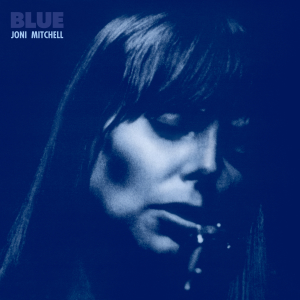
I enjoyed this profile. The fact that the subject was briefly Joni Mitchell's lover, and figures in a couple of Mitchell's best songs, is not the most interesting thing about him. 

Wednesday, July 28, 2021

Adventures in medicine without a license


By Henry Vandyke Carter - Henry Gray (1918) Anatomy of the Human Body, Plate 833, Public Domain, https://commons.wikimedia.org/w/index.php?curid=541692

You say neuroma, I say fibroma, let's call the whole thing off.

(I stumbled on a blog post by a hiker talking about his foot pain, which might offer some clues about MY foot pain. I might just need a shoe with a wider toe box...)

The linked page suggests the following non-operative treatment: "Don't do what hurts, until it doesn't hurt to do it anymore." Makes me feel better about my lack of a medical license.

Monday, February 01, 2021

Crossing

"What river have you crossed most often in your life thus far?" A blogger I follow posed this question the other day, and it generated many comments and some interesting discussion.

I'm drawn to rivers. They connote time, dissolution, and renewal in resonant ways; there are several rivers that occupy a large space in my memory.  I have family connections to the New River, where some of my ancestors operated a ferry service near Radford, Virginia. The biggest chunk of my childhood was spent in northern Virginia near the Potomac. I did two years of graduate school in Baton Rouge, and for the first year lived a block from the Mississippi River. I used to go for walks or runs on the levee, dodging the cows (property of LSU Vet School) that grazed on the grassy manmade bank, and taking in the awesome sight of the rolling water. 

I have to admit, though, I rarely had occasion to take a bridge across the Mississippi. Baton Rouge is huddled on the east side of the river, and there wasn't much of interest on the west side.  I've never had a commute, in my adult working life, that involved a river.  I've crossed the Potomac, the Hudson, the Delaware, the James, many of the rivers in North Carolina on many trips, but never on anything like a daily or even weekly basis.

Pondering the question at the top of this post, making my calculations, I came to a surprising answer.

When I was in the middle of 10th grade my parents, my brother, and I moved to Long Valley, New Jersey. Actually, although Long Valley was our mailing address, our house was on top of Schooley's Mountain, surrounded by small farms, woods, and burgeoning suburbia. It was a pretty area in which to make one's home, but it lacked amenities, or at least it did in the early 1980s. Most of the trips we needed to make (to schools, jobs, stores) involved a drive down the mountain, into the town of Long Valley, and then usually through, continuing on to the larger town of Chester, or deeper into the interior of Morris County, into the gravitational field of New York City. 

Every trip through Long Valley meant crossing a short bridge, about as wide as a school bus is long. Twice a day every school day for 2 1/2 years, I crossed that bridge.  Add the times I rode to or from a summer job in high school, or during summers off from college, and times visiting friends in Chester then returning home, I'd estimate I crossed that bridge 1,800 times, give or take.

I moved away from New Jersey after college, then my parents moved away, back to Virginia, a couple of years after that, and it's been over 30 years since I set foot in Long Valley. I never gave the bridge or the river much thought even when I lived there, and I had to check Google Maps to remind myself the name: the South Branch Raritan River. (Call it a mere half-river if you want, but in my book, it counts.)

Rivers are boundaries. Rivers are pathways. The Raritan was an everyday part of this difficult phase of becoming an adult, despite not fully understanding or consenting to anything I was doing. There I was, young and living in isolation, in retreat, on top of a mountain. Going down the mountain was my daily half-asleep morning commute, but maybe there was instinct behind it: to come down to the river valley to seek friendship, to make connections, to grow up. 

Thoughts of Long Valley and Schooley's Mountain pop into my mind more and more often in recent years. My brother took a trip back to NJ last year, maybe I can manage one sometime in the post-pandemic future. I regret that I couldn't find an un-copyrighted photo of the "German Valley bridge." Here is a semi-random bridge shot I took on a day trip with my daughter a couple of years ago,


Nolichucky River, Erwin, TN. Photo by JBJ.

Thursday, December 31, 2020

Wes Unseld


Wes Unseld had no flair, and what made him a great basketball player defies easy description.  I grew up in the D.C. suburbs, so Wes's Washington Bullets were my team, and I saw Wes play several times at the old Capital Centre.  But it was Julius Erving of Philadelphia whose poster I had on my wall. Wes Unseld had no posters or highlight reels to his name.

Burly and immensely strong, he stood about 6’6”, a substandard height for an NBA center. He was a slow runner, a poor outside shooter, and as for leaping, well, he was definitely governed by the law of gravity. But in addition to gravity, Wes had gravitas: his poker face communicated calm intensity. He used his bulk to maximum effect, on defense and box-outs and screens. Also, Wes had great hands, strong but dexterous. He spent little time holding the ball, but when he had it he usually did something positive with it: he grabbed tough rebounds, made quick shots in traffic, putbacks and short hooks mostly, and made purposeful passes.

In particular, Unseld became known as the master of the outlet pass, the one that starts the fast break after a defensive rebound.  Let's face it, if a guy gets to have a superpower, outlet passing is a very esoteric choice. But it combined all Wes's gifts: those great hands, that core strength, his quick mind and aggressive attitude. Outlet passes are hard work, they're "hockey passes" that usually don't show up in the statistics. They're a mark of a winner and a leader.

Clearly, his contemporaries saw something special in him. In 1968-69, his first season with the then-Baltimore Bullets, despite scoring at only a 13 ppg rate, Wes was named NBA Rookie of the Year and Most Valuable Player, a rare double distinction. Perhaps the voters saw Unseld as an inheritor to Bill Russell: the center whose stardom consisted of defense and rebounding rather than scoring. The most impressive stat may have been the Bullets' won-loss record, which improved by 21 games in Unseld's first season.

But no team would inherit the mantle of Russell and the Celtics. The decade of the 1970s in pro basketball was turbulent. No NBA team even defended their league title successfully (in other words, no repeat champions).  The best player of the ‘70s was Kareem Abdul-Jabbar, but only in 1971 did Kareem’s team assemble enough talent around him to win a title. (He made up for lost time in the '80s with the Lakers.) Most years, one team had to scrap and claw and limp and enjoy a few lucky breaks along the way to win in the playoffs.

The Bullets best exemplify what I mean. With Wes’s rookie year, they started a run of 12 straight seasons making the playoffs, with a constantly evolving lineup, Unseld the single common denominator of all those teams. Defense was the Bullets' calling card, especially in the half-court and in the paint, in Wes's domain.

They won four conference championships in the ‘70s.  In two of those years, they were favorites to win the Finals, but got knocked off.  But they hung around, and in 1978, after an injury-plagued regular season, several things broke in their favor and cleared their way in the playoffs: 

  • Portland were the kings of the West and owners of the best record in the NBA before Bill Walton broke his foot, which doomed their chances.  
  • Philadelphia’s run-and-gun team of Dr. J, George McGinnis, and World Free crashed and burned, falling in an upset to the Bullets in the Eastern Conference finals. (McGinnis and Free would be gone the next season.)
  • At the end of a grueling Finals between Washington and Seattle, the Sonics' Dennis Johnson shot 0 for 14 from the field in Game 7, a historically bad performance and highly uncharacteristic of DJ.

It’s hard for me to think of Wes’s playing career without thinking of Elvin Hayes alongside him. The Bullets would always need a primary scorer to make up for Wes's shortcomings in that area. In the early years that was Earl “The Pearl” Monroe, who had the playground style and scoring potency that Wes lacked. After Monroe left for the bright lights of New York, the Bullets brought in Elvin.

In contrast to Unseld, Hayes preferred to do things that show up in the stats.  He had a trademark shot, a turnaround jumper, and he dunked and blocked shots. He was more fun to watch, and my 14-year-old self in 1978 considered Elvin the star of the Bullets, not Wes.  Later I would learn that Hayes was often considered a selfish player and was not held in the same respect as Unseld. But on the court E and Wes complemented each other. Both of them were later named to the 1996 list of the NBA’s Top 50 players. Each of them had flaws, but the two of them roughly added up to one NBA championship-caliber center.

In that Game 7 against Seattle in '78, helped by DJ's historic goose egg, the Bullets led by 13 at the end of the 3rd period.  But the Sonics mounted a 4th-quarter comeback, and Elvin Hayes fouled out early. Wes would end up with 5 fouls himself, and would struggle to keep Marvin Webster and Jack Sikma at bay. He posted a classic if unspectacular Unseld stat line: 15 points, 9 rebounds, 6 assists.  The Bullets held on, winning the franchise's only NBA title, validating a decade's worth of tough play and persistence, and the NBA Finals MVP award was bestowed onto Wes Unseld.  There is poetic justice there.

Wes Unseld died on June 2, 2020, in Baltimore. The obituaries I saw emphasized his long years of loyal service with the Bullets/Wizards, including stints as head coach and general manager after his playing days ended. He was a one-club man and an outstanding citizen of Baltimore.  But it seemed to me there was a shortage of tributes to Wes’s play. Wes was unique, he competed on a team and in an era that deserves more notice, so I decided to share some impressions.

Monday, March 02, 2020

New Holland


What is a staunchly conservative Dutch Reformed Church doing in the tiny, remote Eastern N.C, community of Pantego?

Well, it turns out that 25 Dutch families settled in Beaufort and Hyde Counties, beginning in the 1910s, displaced by WW1 and finding the marshy area around the Inner Banks to their liking.  What's an activity the Dutch are known for?  Draining wetlands.  After that?  Growing cut flowers.  The Dutch arrived as part of the effort to drain Lake Mattamuskeet.  When the drainage project ended, and Mattamuskeet was restored as a wildlife refuge, some of the Dutch turned to raising cut and bulb flowers, and some continue to this day.

(Photo by John Wenzelburger, CC BY-NC 2.0)

Monday, February 17, 2020

Desire Path

You've no doubt noticed the paths that form on a college campus, or in a park, or other grassy place with a lot of pedestrian traffic -- the paths that weren't laid out by any landscape designer, but are created by the footfalls of actual people finding the best ways to get to where they need to go. 

The term for these unplanned user-created trails is desire paths.  It can also refer to deer paths or other non-human highways.  The presenter in the linked TED talk says that the designer's job is to see where the desire paths occur and then to pave them.

Desire Paths would be a good title for something.

Wednesday, February 12, 2020

Transcribing

A potentially fun, fairly easy, and potentially benevolent activity: being a volunteer online transciber for the Smithsonian Institution.  More details here:

https://transcription.si.edu/browse?filter=owner:1

Friday, January 31, 2020

founding fathers

Typing the title of this post sent me on a mental tangent: We took my father out for dinner for his birthday last week, my brother and I and our wives.  Dad is a rare specimen, a type that political reporters constantly seek and rarely actually find: a well-informed, judicious, thoughtful political independent: a swing voter.  And Dad despises Donald Trump, which is something our party of five could agree on.  However, as we learned while we chatted over Tex-Mex food, Dad is reading a biography of Jefferson, still a hero of his.  (He may be reading Dumas Malone on Jefferson.  Nobody reads Dumas Malone any more.)  Dad expressed a disdain for Alexander Hamilton, not understanding where the wave of Hamilton-mania comes from.  Something to record about this era in my American life: the shift in view of U.S. history as basically full of racism, injustice, and horror.  This is basically my children's view.  Increasingly it is my view.  For my parents, American history is still a story of heroic (white) leadership, bravery and honor.  I am in the middle here.  The shift is wrenching and it's personal; it's a point of stress in my family.  There is more to write here; maybe another day.

Originally, I wanted to post something today in response to the U.S. Senate folding on impeachment. (Specifically the GOP Senators, and most conspicuously Lamar Alexander, tarnishing his reputation in his last act before retirement.  These people are at their preening pompous worst at moments when they represent the tipping point, the 51st vote.  They love that attention.)  I'm angry and despondent, but trying to come away with a lesson here, more valuable than "our politicians suck."  Yes, GOP pols in this age are craven cowards, but the Trump presidency has revealed the weaknesses and limits of the U.S. Constitution.  Impeachment is poorly designed.  The drafters of the Constitution did not foresee the development of political parties.  And Watergate (which many of us, 10-year old Me included, interpreted as proof that The System Works) was an anomaly, considering that the Democrats had controlled Congress for 40 years at that point, and the U.S. was still in its weird Jim Crow configuration cross-cutting the parties, so that Southern racists tended to be Democrats.  That's the era of bipartisanship that so many in D.C. hearken back to.  Nobody should want to go back to those days.  Full explanation below.

https://twitter.com/jtlevy/status/1223263014385745925

Friday, January 03, 2020

Bounty Hunting

https://www.vox.com/2020/1/3/21035114/bounty-hunter-money-income-job

I once met the guy who at the time was pastor of a church in Robbinsville, North Carolina.  Upon moving there, he found the locals to be distinctly standoffish and suspicious.  Eventually someone explained to him that the people who founded the town included several bounty hunters, whose occupation made them aloof and wary, and that fact colored the character of the town many decades later. 

Friday, December 29, 2017

Sam Wells

Another bookmark.  Sam Wells, writing in The Christian Century about a clergy reflection group he ran, one of whose members divulged that she was gay. (A version is in the January 3 print edition.)

Saturday, October 21, 2017

Friday, June 30, 2017

Dogged defender of science and human rights

My wife asked me yesterday if I wanted to go with her to a talk that evening at the museum where she works.  I think she said the topic was the flora and fauna of the Holy Land.  I can’t say the topic captivated me, but it sounded like a cheap date for a Thursday evening.  The museum café has good sandwiches and cold micro-brews on tap.  So I said sure.

Now I’m curious what her ulterior thinking was.  The speaker, I now know, was Dr. Mazin Qumsiyeh, Director of the Palestine Museum of Natural History.  The museum, located in Bethlehem in the West Bank, is a shoestring operation – Dr. Qumsiyeh himself draws no salary -- so he is touring the U.S. raising money and making connections to support his work.

Qumsiyeh was in town yesterday in his capacity as a scientist.  At other times, he acts as a human rights activist and overall thorn in the side of the Israeli government.  I suspect my wife simply wanted to show up in support of this guy.  His name had provoked a lot of calls from local Jewish groups wanting the museum to cancel his appearance.  He also attracted the attention of U.S. Homeland Security when he entered the country.  He might allow himself to complain about these things on his blog, but the bastards couldn’t stop him.

His talk, to be honest, was a little dry.  He was not an ace presenter: mike held too far from his mouth, PowerPoint slides a little too crowded.  But his lack of pizzazz worked, by way of contrast, to enable the power of science, facts, reason, to cut through the scrim of political posturing.  For example: Access to drinking water is a looming crisis in the Middle East.  Israelis consume several times as much water per capita as Palestinians – and West Bank settlers consume more than other Israelis.  Qumsiyeh underscored the point with a simple bar chart.  Second example: Some parcels of West Bank land were set aside for their environmental value, only later to be filled chock-a-block with ugly concrete settlement flats.  Qumsiyeh had the before-and-after photos.

Though I didn’t know what I had signed up for in advance, it was inspiring just to learn about Dr. Mazin Qumsiyeh, to be reminded that people like him exist in the world.  The theme of the evening was the struggle for environmental justice.  That includes the struggle of oppressed people, young and old, merely to learn about and appreciate the natural world.  To assert that a nature museum should exist at all in the West Bank, is to assert something about basic human worth.


The Q&A may have been better than the scripted talk; the audience had thoughtful questions.  One question linked the injustice of the Likud government to that of the American GOP, and the long-run futility of the Haves being punitive toward the Have Nots, instead of looking for win-win policies.  In the end, we’re all in the same boat and are fools to think otherwise.  Pollution does not recognize borders or factions.  Fortunately, nature still exists, life is tenacious, even in a landscape blighted by war and military occupation.  

The Israeli government refuses to build adequate sewage facilities in Gaza.  So the people there dump raw waste into open sewers.  The waste then flows to the sea, and the prevailing currents send it to Tel Aviv and Jaffa.  “They are swimming in the shit of Gaza.”  That was the rhetorical high point of the evening.  

Wednesday, March 01, 2017

Naming Things

Bookmarking Masha Gessen.

The big disconnect in this blog is that I have hardly written a word about Donald Trump, who has been dominating my consciousness, as well as the country's, for the last 18 months.

I look forward to the day sometime in the future when the country reaches some kind of consensus about what the Trump Ascendancy meant.  What's difficult right now is the heightened sense of anxiety and confusion, of cognitive dissonance, that so many of us feel.  It's been barely a month since Trump's inauguration, but it feels like years.

Even Trump supporters, I imagine, must be confused about the wave of resistance that has swelled SINCE the election. It certainly says something not-so-good about the American left-liberal side, that it appears we really got motivated only after the votes were cast.  We were complacent, and now we're full of recriminations and denial.

The Democratic Party is still groping for unity.  It's still divided along the roughly the battle lines that formed between Hillary Clinton and Bernie Sanders during the primaries.  We just had a race for DNC Chair, something I don't think is worth much worry, given the tiny ideological distance between the two leading candidates.  But Bernie people became invested in Keith Ellison, and Hillary people gave some degree of behind-the-scenes institutional oomph to Tom Perez.  Perez won, and instantly anointed Ellison as his Vice Chair (it seems by advance agreement, whoever had lost would have joined sides in this way).  But many Bernie people feel slighted nonetheless.

Today I want to note something.  I hope that, eventually, it will be hard to remember this.  It's still unclear how much credit for Trump's election is due to the clandestine efforts of business and government forces in Russia.  Plainly, Vladimir Putin wanted Trump to be elected.  Whether Putin and his collaborators really pulled it off--I hope history will rule decisively on that question.
Right now this is a point of contention between "the Left" (Bernie people, The Nation magazine, Glenn Greenwald) and "liberals" (Hillary people, Lawyers Guns & Money).  To some on the Left, invoking Putin's name as an anti-Trump epithet is an act of red-baiting, reminiscent of Joe McCarthy. 

I find this condescending in the extreme.  I've paid enough attention in my lifetime to have noticed that the Soviet Empire crumbled, and Russia pivoted from a socialist state to a right-wing authoritarian state.  There's a big difference between Putin and the oligarchs, and the old Soviet leaders and state structures.  It would be stupid not to notice the difference.  It would be highly disingenuous to pretend not to notice.  I strive to be neither stupid nor disingenuous.  PUTIN IS ON THE RIGHT.  Surely the Democratic Socialists of America and The Nation can agree to this.  Glenn Greenwald may be beyond hope.

We need brave and steady voices to help us cut through the chaos and tension of the moment. Indivisible, an organization founded by Democratic Hill staffers, is one; its mission is to give smart tactical advice to the anti-Trump resistance without blunting the urgency of that resistance.  Masha Gessen, Russian emigre journalist, is another.  Here she is talking about Trump and Putin, and about a conspiratorial view of world events versus a chaos-theory view that I incline toward.

Sunday, February 19, 2017

Robeson

Bookmarking: The Raleigh N&O has an investigative piece today by Joseph Neff, about a 28-year-old death investigation.  Civil rights lawyer Julian Pierce was murdered in 1988, in the midst of an election campaign for a judgeship.  The chief suspect in his shooting conveniently turned up dead himself, in what was ruled, incredibly, a suicide.  Pierce, a Lumbee Indian, was promising to push for school desegregation and other legal reforms in the corruption-filled swamps of Robeson County, NC.  Pierce's opponent in the judicial race was Joe Freeman Britt, notorious as the World's Deadliest Prosecutor, seemingly able to get a capital conviction against a ham sandwich.  There are whispers of law enforcement and drug dealers being involved in Pierce's murder.  His daughter is pressing to get the case reopened, and is meeting a lot of resistance.

I've long been fascinated by Robeson County, a lawless place, racially divided almost into thirds among white, black, and Lumbee residents.  (It is the center of gravity for the Lumbee band, a caste of gypsies among gypsies, which has strived futilely for decades to get federal tribal recognition.) But more than that, my historical consciousness has been heightened by the dizzying reality of the Trump presidency.  It feels like the most awful political twist ever.  Of course, Americans of color will quickly set me straight about that.   In the South especially, it was hair-raising, the racist violence that small-town sheriffs and prosecutors could get away with.

So I'm fixing on these facts of our civic life, that seem horrific by my lights today, but were accepted as thoroughly "normalized" not so long ago.  A candidate for judge was shot dead!  In 1988, when I was of voting age and registered here!  I don't remember being aware of the case at the time.

Another example: A Facebook friend in Raleigh got his hands on a sales flyer for his neighborhood, which was developed in the 1950s.  A nice leafy neighborhood now, in a voting precinct that probably went for Hillary last fall.  The brochure has a bullet point reading, "RESTRICTED FOR YOUR PROTECTION."  It clearly refers to a No Blacks covenant in the real estate sales contracts.  There are lots of people still around for whom that is a living memory.  The realtor is still in business.

Today, for a political campaign in a rural corner of the state to end in an assassination -- that would beggar belief.  In 1988, however, it was plausible.  And what remains today is an unwillingness to confront the wrongdoing and its implications.  We blanch at actual violence or brute statutory discrimination such as our parents or grandparents engaged in.  But we generally refuse to confront the consequences of our recent history responsibly.  It's very uncomfortable for officials to publish the truth and administer justice, be it financial reparations to victims or criminal convictions against the culpable people who are now honored dead or respected elders, therefore "harmless".

Here's a great dramatic detail.  Julia Pierce, struggling to get her late father's case reopened, finally got a meeting last year with the State Bureau of Investigation.  Without warning her, they invited the retired SBI agent who'd originally handled the case to the meeting, and let him do most of the talking.  He came off as a tad defensive: 

“If your theory is true, I’m either incompetent or dishonest,” Bowman said on an audio recording of the meeting. “So which is it?”

Well, sir, you don't appear to be incompetent. 


Tuesday, January 03, 2017

Winter 1988, Pennsburg, PA


One morning last winter, I got in the car and turned on the windshield wipers when they were frozen tight to the glass.  Which glitched the little motor on one side, so now the wiper arms are cattywompus, moving out of sync.  After several minutes of wild waving, they get jammed together, then I have to pull over, step out in the rain and free them.