There are rumors that Gabrielle Giffords's husband, Mark Kelly, may run for U.S. Senate from Arizona. Or anyway, here is a rumor to that effect.
Wow. Trying to place myself in Mark Kelly's shoes: My wife has been a target of threats, harassment, and finally a near-successful assassination attempt, due to her work in politics. Now she is disabled and needs daily rehab for a brain injury, from the assassination attempt previously mentioned. Now I am going to leave her side AND enter the business that messed up her life?
Friday, June 24, 2011
Monday, February 14, 2011
Ronaldo retires
Slate soccer writer Brian Phillips, being awesome as usual, writing about Ronaldo, who announced his retirement yesterday.
Phillips also touches on that theme beloved of futbol-intellectuals, that the highest purpose of the game is to model beauty and innocence, not to yield the competitively-correct outcome.
As a media figure, Ronaldo was never cool in the ruthless-visionary way of Zidane or in the lost-album-cover manner of Beckham. He seemed affable, funny, a little ingenuous, a little strange. Those qualities made him human, but they also made him a terrible fit for modern sports journalism, which knows how to handle only one kind of superstar—the kind who is entirely focused on being one. (That is, the kind of superstar who uses the media back.)...
...
And so, in the retirement stories, you get bizarre summations like this one, from Paul Wilson's oddly half-hearted Guardian write-up: "His career choices may not have been ideal, his lifestyle questionable and his fitness, particularly his knees, suspect throughout, but in spite of all that Ronaldo deserves to be remembered as a remarkable player." In spite of being the person who became a remarkable player, Ronaldo deserves to be remembered as a remarkable player. This is where you can either stay alive to what's wonderful about sports or give up and admit you see players as oil wells. Ronaldo isn't a quantifiable reserve of potential that was never efficiently tapped or a set of character traits that never reliably pumped out his natural talent. He's a person, the interface of whose personality with the world produced some breathtaking moments in a game.
Phillips also touches on that theme beloved of futbol-intellectuals, that the highest purpose of the game is to model beauty and innocence, not to yield the competitively-correct outcome.
Monday, February 01, 2010
Lombardi blogging

There was a 1973 made-for-TV bio of Vince Lombardi, Legend In Granite, starring Ernest Borgnine. There is a scene when Lombardi is in his first training camp as the newly-hired coach of the woefully bad, underachieving Green Bay Packers. Lombardi has been brought in to instill discipline and get back to fundamentals, and in his first team meeting holds up a pigskin and intones, solemn as the grave, "Gentlemen, this is a football."
One of the players, Paul Hornung probably, pipes up: "Slow down, coach, you're going too fast," and Lombardi struggles to look mad but finally breaks down laughing, the whole room full of players cracks up, the tension is lowered and male bonding ensues. The players begin to see that in Lombardi there is love beneath the sadism; he bullies because he cares. A well-crafted piece of sports hagiography, this film.
But I'm thinking Coach Lombardi probably never used the "this is a football" line again, it was just too ridiculous.
Why do I mention this today? Via Atrios: The Federal Reserve has created an online training resource for new bank directors. The need for this is that some people are appointed to bank boards knowing very, very little about banks. From the Fed website:
The legendary Green Bay Packers football coach, Vince Lombardi, recognized the importance of teaching basics to his players. Even after winning championships and being surrounded by future Hall-of-Fame players, Lombardi had a tradition of beginning every preseason training camp the same way. He stood before his players, football in hand, and said, “Gentlemen, this is a football.” He assumed his players were a blank slate at the beginning of each season. With that in mind, we begin with the basic discussion, “Ladies and gentlemen, this is a bank.”
Suffice it to say, this is an analogy that is botched in a revealing way. Our banks are far from being champions -- at this point they are underachieving failures. But the Fed's approach here does not fill one with optimism. As a general observation, when Vince Lombardi is invoked to make a point about leadership in this day and age, little good can come of it.
Man, Ernest Borgnine's IMDB page is a trip. I never thought about it, but Ernest is Italian himself (originally Borgnino -- man, he needed either to change his name more drastically or not at all) and darn near as old as Lombardi, who died in 1970! This is one of those pairings of actor to non-fiction role that was destined to be, like Hal Holbrook as Mark Twain, or Shelley Duvall as Olive Oyl. I'm a little bummed that IMDB will no longer show the full cast and crew of an old program like Legend In Granite unless you register for IMDB Pro. For people who enjoy aimlessly browsing the cast lists of unremarkable made-for-TV films from the 70s, this is a shame.
Monday, January 25, 2010
Quick answer
MoveOn e-mails me this afternoon -- subject line "Quick question for you?"
I clicked Probably Won't. But I wished for a 50/50 option, and I also wished for a comment field to say the following:
Let's be honest, I don't have a lot of discretionary cash for political contributions, so I wouldn't be "making it rain" in a midterm election anyway. The best I could conceivably answer is Probably Will.
However, if the Congressional Dems walked away from the health care bill, I would likely conclude (1) they were acting like a minority party anyway -- like a de facto opposition party to Obama, and (2) they were acting as if special interests were more important to them than the "un-organized" support of individual base voters like me. So I'd be inclined to treat them the way they're asking to be treated.
I'd vote for my Democratic candidates, sure, but give money to the DCCC or DSCC? Give financial expression of enthusiasm for the national party's efforts? Not bloody likely.
Well, that was quick! More later.
It's no longer clear whether Congress will pass a comprehensive health care reform bill this year.
The White House and Congress will decide within days whether or not to go forward with reform—and before they do, it's critical they know the impact that decision will have in terms of participation in the next election.
So we're polling MoveOn members: If Democrats do not pass comprehensive health care reform this year, will you donate to Democratic candidates in the 2010 elections? Just click the appropriate link below to let us know:
- Definitely won't donate
- Probably won't donate
- Probably will donate
- Definitely will donate
I clicked Probably Won't. But I wished for a 50/50 option, and I also wished for a comment field to say the following:
Let's be honest, I don't have a lot of discretionary cash for political contributions, so I wouldn't be "making it rain" in a midterm election anyway. The best I could conceivably answer is Probably Will.
However, if the Congressional Dems walked away from the health care bill, I would likely conclude (1) they were acting like a minority party anyway -- like a de facto opposition party to Obama, and (2) they were acting as if special interests were more important to them than the "un-organized" support of individual base voters like me. So I'd be inclined to treat them the way they're asking to be treated.
I'd vote for my Democratic candidates, sure, but give money to the DCCC or DSCC? Give financial expression of enthusiasm for the national party's efforts? Not bloody likely.
Well, that was quick! More later.
Wednesday, January 20, 2010
"Forty-one! Forty-one!"
This was the victory chant at Scott Brown's rally last night. How completely absurd: (1) that the revelers were so giddy at their party's strengthened ability, still as the opposition minority, to prevent anything from getting done; and (2) the idea that this is the magic number in modern day Washington. 41 No votes out of 100, in the most dubiously democratic assembly in the developed world.
Mark Schmitt argues that a 59-vote Democratic caucus will be an improvement.
Certainly the main lesson I've gotten from the health care reform debate is the need to reform the Senate and do away with the supermajority.
Mark Schmitt argues that a 59-vote Democratic caucus will be an improvement.
Sixty votes not only put Lieberman and Nelson in charge, it meant that every little twist and turn in political life became the difference between total policy deadlock and historically breathtaking progress. A butterfly flaps its wings in Uruguay, and health reform survives or dies. Just as a few hundred votes in Minnesota created the 60-vote majority, a bizarrely incompetent candidate in Massachusetts took it away, but if it had not been that, it would have been something else.
Certainly the main lesson I've gotten from the health care reform debate is the need to reform the Senate and do away with the supermajority.
Wednesday, January 13, 2010
Haiti
Thoughts and prayers for the people of Haiti, which was struck by a major earthquake yesterday.
Tuesday, January 12, 2010
Higher ed reform

Via Ezra Klein, an interesting piece by Kevin Carey in Democracy about the need for reform in American higher education.
The main takeaway: The marketplace in US colleges operates on reputation, not information – there is a paucity of comparative outcomes data on how well, e.g., business departments’ graduates perform in business – and the elite colleges (via a powerful lobbying shop in Washington) do their best to keep useful outcomes data from seeing the light of day.
Carey notes the huge boom since World War II in the number of Americans who attend college. Some of the younger institutions founded in that time frame deserve more credit, and some of the older brand-name institutions are coasting. I am the parent of a high school student, soon-to-be tuition payer, and as a matter of fact the college she expresses most interest in is in the “young and possibly on the rise” category. So color me intrigued.
I've been seeing the end-of-decade spate of retrospectives, mostly gloomy. Also, I'm working through James Fallows's Atlantic cover story which is an anti-jeremiad: why Americans shouldn't be pessimistic about our national future. I still worry that America has slipped into a state of decadence preceding a steep fall. One reason is the harmful influence of lobbying. Carey's story may not be the best example, but it is a data point. The US has lost focus on producing goods and services. Our economy is founded on real estate flips, other forms of financial sleight-of-hand, and lobbying for regulatory relief and/or government-sponsored obfuscation. Add college presidents to the list of classes of leaders who would rather pay lobbyists to sustain the corrupt and ultimately unsustainable status quo, rather than seriously re-vision and reform their way of working.
Also, I want to highlight this passage that compares the arrogance and self-protectiveness of colleges to that of churches:
Colleges are often lumped in with other non-profit entities like charities and hospitals in the public mind. But they actually most resemble the institution from which many of the oldest and most renowned colleges sprang: organized religion. Like the church, colleges have roots that pre-date the founding of the republic. They see themselves as occupying an exalted place in human society, for which they are owed deference and gratitude. They cherish their priests and mysteries, and they are disinclined to subject either to public scrutiny.
Interesting to me largely for the view of religion being expressed. Not saying it’s right or wrong, either the view of contemporary religion or the college-church analogy. It bears thinking about.
Thursday, August 20, 2009
Beach read
The fam and I had a week's vacation at the Outer Banks of N.C., where we had a most excellent time. We stayed on Hatteras Island, in a house that's within a 20-minute walk of the ocean, and whose property backs onto Pamlico Sound, with a dock that's ideal for swimming, fishing, kayaking, or just chilling with a beverage and some reading material. We've stayed at this house (owned by a friend) three summers running now. I have a soft spot for the Outer Banks, since one of my favorite family vacations from childhood was there, and I took my wife there on our honeymoon. We've managed in three visits to do all the touristy and nostalgic stuff I had on my list: the Lost Colony outdoor drama at Roanoke Island, the Wright Brothers museum, the giant sand dune at Jockeys Ridge, the ferry to Ocracoke, the climb to the top of Cape Hatteras Lighthouse.
The property where we stay is four acres, mostly marsh and maritime forest, boasting a great assortment of wildlife. We came home one day to find a deer in the yard, and we're pretty sure we saw an otter on the banks of the sound. The house and yard are ringed with trees, screening out the road and neighboring houses. There isn't a curtain or blind anywhere in the house, being unnecessary for privacy. At the top of the house is the master bedroom suite, with a vaulted ceiling perhaps 15 feet high. On one wall there is a sliding glass door and a sundeck facing inland toward the marsh and the sound, an excellent birdwatching spot. On another wall, the windows taper and stretch almost to the roofline. These soaring windows face in the direction of the ocean, with Buxton village sitting in the foreground, though neither ocean nor village can be seen due to the trees, only the municipal water tower jutting up. Lying in bed and gazing out the window in the dark, I see the water tower with its red light on top, burning steadily, and then at intervals, the beam from Hatteras Lighthouse sweeps over us. It's a lovely thing to look at before drifting off to sleep.
So the location is a blessing, a real stroke of good fortune. Friends are another blessing: the family whom we invited to share the house with us, whose kids and my kids mutually entertained one another, and who brought and shared good stuff to read: magazines they were catching up with, finds from the used book shop, the Sunday New York Times (a rare treat for me). It was a great vacation for reading. The kids played board games or watched DVDs in the evening, while the grown-ups read, or talked about politics or fiction, about what we were reading.
My random book choice: <a href="http://www.biblio.com/isbn/9780671200299.html">Captain Dreyfus: The Story of a Mass Hysteria</a> by Nicholas Halasz, (c) 1955. I can't be sure but I may have bought it at a used book sale in Louisiana, oh, about 22 years ago, and been lugging it to various apartments and houses ever since.
It's a good read. I was on the lookout for parallels b/t the Dreyfus affair and recent U.S. history, and they're there: a country admired worldwide as a center of Enlightenment values losing its collective mind, exalting national security while ignoring civil rights, fleeing from justice and truth if those violated nationalist myths. But France in that period is fascinating in its own right, with priests, generals, royalists, Bonapartists, and "republicans" of many stripes vying for an upper hand, obsessed with the growing power of the Kaiser, and still working out the implications of the French Revolution which at that time was a mere hundred years old.
Blade

Do you ever have a day at the office like this? For legitimate work-related reasons, I Googled the name of a woman who is a mental health counselor, trying to get her contact information. To my surprise, I learned that she apparently used to be a DJ on an AOR radio station here in Raleigh in the ‘80s and ‘90s.
Which set me off on an online reading tangent. There actually is a Wikipedia entry about WQDR, which I know as a country station but which started life as Raleigh’s first AOR station. It drops the names of various disc jockeys I remember, some of whom can still be heard on local radio, most of whom have moved on to other things. And then I discovered the blog Blade’s World. This is where I have spent half my day.
Bob “The Blade” Robinson inspired me to write this High Hat essay a couple of years ago. A longtime rock DJ in Raleigh, Blade had his station, WRDU, suddenly change formats on him, from classic rock to country. This was a mildly depressing development for me; for the Blade, it was heartbreaking. He was faced with a dilemma. He liked his co-workers, didn’t want to leave Raleigh -– hell, we all need to have a job -- so he tried to keep working under the new country format. He lasted a week. This newspaper account of his abrupt on-air sign-off got me to thinking about the decline of rock music on FM radio, and its effect on me as a music fan. Also the figure of the rock DJ, his passion for music, the intimate bond he could form with listeners, his role in the community. My article ended up being about the rock station I heard as a teenager, but it started about being directly about Bob the Blade.
I wouldn’t even say I’m a fan of Bob the Blade, I just felt like I knew him. I've heard his voice on a pretty regular basis for 20 years now, often just him and me in my car. I admired his quitting due to "artistic differences" back in '06. He's back on the air in Raleigh now, but I don't tune him in every day; I'm more of an NPR guy now. Anyway, his blog sucked me right in. He’s a slacker in many ways, exhibits the taste for parties and girls and odd hours that originally helped attract him to the radio business. But now he’s a middle aged slacker, eying his own mortality, examining his relationships present and past, snarking about the industry he's spent his life in. There’s an intriguing self-awareness and honesty at work in that blog.
Here are the surprising things I learned about the Blade. He has a brother who has a disabling mental illness, whom Bob helps care for. Under the man’s-man exterior, Bob is a decent, patient, caring guy. (Actually, family and pets represent a lot of the blog’s content.) Also, he’s a pretty good writer. I say that a little grudgingly – I enjoyed his blog more deeply than I expected to. Frankly I don't always share Blade’s musical taste, I have to say I figure I’m "smarter" than him (I spent more years in school, certainly), but he’s a better writer than I am. He just has a good way with a story. Also a pretty good way with a camera.
Monday, July 13, 2009
Beehive

This NY Times profile is notable for its no-holds-barred interview with Sarah Palin's hairdresser. Nice get.
Also, I hate it when somebody writes on my kid with a Sharpie. That shit will take weeks to rub off.
Wednesday, April 01, 2009
A two-way street
Pastor Dan, from yesterday:
It's reasonable for a scientist to expect that scientific discussions be conducted under the guiding framework of science. What is not reasonable is for that same scientist to take umbrage at the religious framework for the mere fault of existence, or to expect that a "rational" worldview should necessarily dominate moral discourse.
If the faithful are required to engage the scientific paradigm, the scientists should be prepared to do the same for the religious paradigm where appropriate. You don't have to endorse it, you don't have to consider it an equal either way, but you should be prepared to listen and seek understanding without hostility or contempt. Otherwise, you're just as narrow-minded as the intolerant people you decry.
Tuesday, March 31, 2009
Framing and Shaking
My comment, reposted from the Faith and Leadership site:
*
This may be beside the point of why the link was posted, but I object to the way the AIG bonus problem is being characterized. The Columbia professor takes a significant ethical failure and treats it as a PR challenge.
Part of the problem is that Wall Street has a different understanding of the word “bonus” than normal people do. (By “normal people” I mean honest taxpayers. In fact Wall Street categorizes a portion of salary as “bonus” to help them weasel out of paying their full share of income taxes.) The public outcry is due to the perception that AIG managers are being rewarded for massive failure, a failure for which “normal people” are picking up the tab.
The argument that we have to pay AIG employees handsomely so they’ll stick around to undo the mess they made, the mess that only they can straighten out – well, now it feels like they’re not simply cheating me, they’re shaking me down.
Business schools’ reputation has taken a beating this year, and I don’t believe this essay does anything to improve that.
*
*
This may be beside the point of why the link was posted, but I object to the way the AIG bonus problem is being characterized. The Columbia professor takes a significant ethical failure and treats it as a PR challenge.
Part of the problem is that Wall Street has a different understanding of the word “bonus” than normal people do. (By “normal people” I mean honest taxpayers. In fact Wall Street categorizes a portion of salary as “bonus” to help them weasel out of paying their full share of income taxes.) The public outcry is due to the perception that AIG managers are being rewarded for massive failure, a failure for which “normal people” are picking up the tab.
The argument that we have to pay AIG employees handsomely so they’ll stick around to undo the mess they made, the mess that only they can straighten out – well, now it feels like they’re not simply cheating me, they’re shaking me down.
Business schools’ reputation has taken a beating this year, and I don’t believe this essay does anything to improve that.
*
Tuesday, March 03, 2009
Paul Harvey
Paul Harvey died the other day. He was an occasional companion who insinuated himself into my affections when I was a kid; I think of his voice coming out of a car radio, me in the back seat riding with my parents. An obituary (which I can’t seem to find right now) quoted a radio industry personage marveling at Harvey’s gift for and mastery of the medium, which sounds right, come to think of it. His “and now you know... the REST of the story” audio essays were miniature classics of a kind, corny and unfashionable but hard to resist, the spoken-word equivalent of a Norman Rockwell painting or an Irving Berlin song.
The obituary also included the eye-popping statement that Harvey received a contract extension for 10 years and $100 million at the ripe age of 82.
The news of Harvey’s death put me in mind of the Bose Wave Radio, for years a faithful sponsor of Harvey’s show. My brother, a musician and audiophile, has a well-rehearsed screed about the Bose radio: about what a fraud has been perpetrated on the American public by Madison Avenue to entice any of us to spend $700 or whatever on a slightly souped-up clock radio. Our father, normally a parsimonious fellow, succumbed and bought a Bose several years ago, and goosed his younger son’s blood pressure about 20 points. The solid-state amp and hand-built speakers that we heard growing up are still in fine shape, gathering dust in Dad’s rec room. He mostly listens to that little white plastic box, the Bose Wave Radio.
Over the years, to my knowledge, Bose has had two main advertising venues: Parade magazine and the Paul Harvey show. I never give either of these much thought, yet they’re as ubiquitous in America as high-fructose corn syrup. For years, both have been welcome if unobtrusive presences in the homes and hearts of white middle America. Both have a distinctly conservative political bent, but sweetened so the audience hardly notices. But white middle America is a declining demographic. Paul Harvey and his show are gone (he was sui generis; the franchise definitely dies with him), and I imagine Parade is endangered, since its fate is tied to that of print newspapers. Both were commercial powerhouses in their day. That day is ending.
Monday, February 02, 2009
Springsteen at the Super Bowl
I really enjoyed Bruce and the E Street Band's performance at the Super Bowl Sunday evening. I thought I'd make a note since it's rare for something on TV to bring tears to my eyes, and for reasons I don't entirely understand, Bruce made me tear up.
Frankly, I haven't listened to a new Springsteen record beginning-to-end in 20 years. High school and college were my Springsteen years, high school in New Jersey when feeling kinship with Bruce was maybe the only fringe benefit of Garden State residency I could see. Then college years, when "Born in the USA" came out, Springsteen hit his peak of stardom, and he mounted the worldwide tour when I saw him live the one and only time so far, Charlotte, NC, 1985.
We lost the thread in the 90s, both Bruce and I, but he has snuck up on me recently. I saw him on the campaign trail for Obama in the fall, saw him appear with Pete Seeger during Inauguration Week. I read the Rolling Stone profile of Bruce just last week, which pointedly celebrates the E Street Band, which Bruce dissolved but later reconciled with, the band aging and hobbled and depleted by death (RIP Danny Federici) but still on a mission. I also read a brief item in the newspaper just days before the game, when Bruce related that the Super Bowl gig has been pitched to him repeatedly over the years, and he warmed to the idea only gradually. The biggest stage, the brightest spotlight in the music world, for better or worse.
Of course, Bruce admits, there is a new album the band wants to promote. He had a lot of bases to touch in 12 minutes' time in Tampa. A cut from the new record, a couple of his greatest hits ("Born to Run" almost certainly), and a little of the between-songs monologuing that his fans expect. I thought he pulled it off in terrific style, touching every base with panache. Mugging with Miami Steve and the Big Man, trading glances with Patti. Doing the commercially smart thing, giving the audience the thing it wants from him, and Bruce being at peace with it and having fun doing it. It was frenetic, sloppy, cornball. Plainly he's past his prime. So am I. He looked and sounded happy, and it made me happy.
I chatted with a friend online today, a guy about my age but not an old friend, who had the exact opposite take, that Springsteen's set was phony as hell.
My teenager was watching and listening with me, and when Springsteen did his spoken-word intro ("back away from the guacamole dip... put the chicken fingers down...") she asked, incredulously, "Is he trying to be funny?" She's never taken a liking to Bruce's records, never been exposed to his stage shtick. It's not what rock frontmen are to do nowadays, I take it; nothing within a mile of stand-up comic patter. That gives a little credence to my friend's dismissive verdict.
My daughter did laugh, however, when Bruce slid across the stage floor and crashed slam-bang into the TV camera.
I've been on a personal nostalgia trip lately. Facebook has put me in touch with some friends from the carefree days of youth, from my early-80s Springsteen period especially. Plus, God knows why, but I have been recalling the NFL collectors' stamp set that was marketed by Sunoco in 1972. I was only in the 4th grade, but that was the year I became a football fan, driven by my mania for completing my stamp set. I must have driven my dad insane, making him fill up the Buick Skylark at Sunoco every blessed time so I could get stamps. My mother or I eventually chucked that stamp album in the trash, probably in the great purge when the family moved from northern Virginia to New Jersey in '78, and I never gave it a thought again until the last couple of weeks.
I was really quite the mawkish sentimental American fool Sunday evening. I embraced our vulgar national football feast. Never was heard a cynical word. I wowed over James Harrison, Larry Fitzgerald, Darnell Dockett, and Santonio Holmes. I was happy for the Pittsburgh Steelers, their owners and fans in triumph. I was happy for the Cardinals, that they could hold their heads high in defeat. I even chuckled at some of the commercials. I actually looked forward to the halftime show and it actually did not disappoint.
Wednesday, January 28, 2009
Parental Grade Grubbing
The public schools in Fairfax County, Virginia have succumbed to a concerted lobbying effort by parents to relax the grading scale. In the future, a 90 will earn a kid an A; from 1981 until now, a score of 94 was required.
This is a cancerous way of thinking. It's a straight line from this piece of news to the recent news that Merrill Lynch paid its managers million-dollar bonuses, drawn from taxpayer bailout funds, for wrecking the company. This is rewarding class status, not achievement. Parents in a top tax bracket who can afford to own a house in Fairfax County are trying to guarantee their children's entry into the same tax bracket. They are not improving their children's education, only their paper credentials.
A depressing story. Check the paragraph about community leaders worrying that real estate values will fall if the reputation of Fairfax schools suffers. Inflating the public school bubble to support the housing bubble.
Wednesday, January 21, 2009
Two ways of looking at Obama: the sportswriter and the sociologist
Here it is, my obligatory collector's edition Obama Inauguration post. First, tedious though it may be, I must mention a couple of varieties of post that I can't make.
I’ve enjoyed the posts at Talking Points Memo the past several days where readers have shared the heartfelt personal meanings they sense in Obama’s inauguration. I cannot make such a post. In this year’s election I was focused on my desire to have the Democrats defeat the Republicans, and the reality-based community defeat the forces of truthiness. The identity of the candidate took a backseat. The symbolic weight of Obama’s victory, of his race and his life story, didn’t especially move me. I take no pride in this admission. On Election Night, as the returns rolled in, the reactions of the network talking heads and of the crowd at Grant Park actually, implausibly, took me a little by surprise. "Oh, yeah, that's right! We never elected a non-white President before, did we! And [smack] I coulda had a V-8!"
I can't make a post nitpicking any of Obama's transition moves looking for signs of betraying progressivism. For instance, I mostly stayed out of the discussion of Rick Warren giving the invocation yesterday. I just wasn’t outraged about Warren ’s inclusion. And I suppose I was a little perturbed by GLBT activists' second-guessing Obama before he even took office. Again, no brag. I’m insensitive, no doubt, about Warren ’s role in the passage of Prop 8 in California .
As an aside, speaking after the fact, I think a non-outraged response to Warren was justified. For one thing, Warren is taking a beating from some of his evangelical cohort merely for taking part in the Obama festivities; I think it remains to be seen who has co-opted whom here. Also, is there any doubt that Joseph Lowery outshone Rick Warren?
I rather suspect that Barack Obama knew Lowery would trump Warren. That's the kind of political skill and diligent preparation I expect from Obama. I admire him. I trust him. In the Rick Warren matter and other matters of political optics and balancing opposed constituencies, I simply have a lot of faith that Obama knows what he’s doing, sees all the angles, certainly much better than I do and better than 99.44% of journalists and bloggers. He's secure, he takes a long view, he has integrity, and he recognizes those qualities when he encounters them in other people. I cut him miles and miles of slack for his vision and judgment.
I don't go in for the hype that Obama is a post-politician or anti-politician, but it's undeniable that he's a refreshing new breed of politician. Obviously he's not above forging partnerships with pols like Joe Biden, but he breaks free of the well-mannered, constipated, Ron Burgundy style that Biden represents.
One way to sum it up is that I’m so delighted that Obama doesn’t play golf.
Oh, golf is fine in itself, gets you outdoors and rewards patience and teaches humility and all that. But golf is also suffused in the trappings of privilege and technology. It's classist as all hell, of course. It's an affront to environmentalism and land use planning. When the revolution comes, golfers will be the first up against the wall. Don't talk to me about mountain biking or brush-clearing -- George W. Bush is the quintessential golfer. I can see both sides in the intra-liberal argument about the merits of Bill Clinton, but I will say that everything wrong about Clinton is crystallized in the fact that he loves golf.
Instead of golf, at the relatively advanced age of 47, Barack Obama plays basketball.
Alexander Wolff makes the case in Sports Illustrated that basketball is the reason Barack Obama is sitting where he’s sitting today.
I miss playing basketball. It’s just a great game, basketball, rivaling jazz music as a great American invention and gift to the world. Two of my kids are playing YMCA basketball this winter, and I watch them from the bleachers with my legs twitching and my palms tingling. I want to lace up some high tops, cinch some baggy shorts, and run full-court. The squeak of sneakers and the pounding of the ball on a hardwood floor: these sounds get my blood moving.
Like Obama, I didn't have much luck on organized basketball teams. (Self-aggrandizing comparison of the day!) In my prime, I was a competent pick-up player. And as Woolf explains, pick-up basketball is its own special animal.: "basketball's speakeasies, not its licensed establishments." You call your own fouls, you check the ball between possessions -- there's an implied social contract that the game relies on. You really learn about people in a special way by playing pick-up ball with them.
You reveal yourself as well. A pick-up game tests you, physically and socially. I have several warm and satisfying memories of pick-up games where I held my own, ball-wise and also in terms of getting along with a group of guys unlike myself: one time in a rough urban neighborhood in Houston, Texas; another time with a group of Naval officers in Pensacola, Florida. The main satisfaction of these games wasn't that my team won or that I made great plays; it was that I fit in. I worked at belonging. The game wasn't mine, it preceded me and it lived on after I departed, but I could hang with it for an hour or two, and I didn't drag the game down. (This is, in part, the pathos of a guy who yearned to play for his high school but was cut from the team. Alex Wolff sees this pathos in Obama as well.)
I really recommend Woolf's article; it's Sports Illustrated at its finest, and it expands beautifully on my poor wheezings about playground ball. One guy who has played hoops with him pays Obama the compliment that he is able to score, but willing to pass; the ideal pick-up player, animated with enlightened self-interest, wanting all individuals to thrive for the sake of the social whole.
This bit sheds light on the distinction between hoopsters and golfers, as well as that between Obama and Bill Clinton:
"Improvisation within a discipline" is a lovely paradigm. It operates in jazz, in religion, in teaching -- in a lot of cool places. I also like "serial returns to equilibrium" as a way of characterizing Dr. Naismith's game.
As a postscript, the past few weeks have seen a myriad of brief reflections on the Web about Obama from (mostly white) writers saying what they love about the man, the moment when they knew he was special, the time they met him in 2002 before he was famous, ad nauseum. Most are easily forgettable, but a good one, and one that deserves a plug, came from Berkeley sociologist Robert Bellah:
This bit sheds light on the distinction between hoopsters and golfers, as well as that between Obama and Bill Clinton:
Pickup ballplayers don't talk as much as golfers during a round, but they more quickly reach judgments about temperament and collaborative aptitude. And there's the emotional containment that ballers learn to bring to the court, even if only to ensure that no one can sneak up behind you to see emotions... you didn't want them to see. Asked the boxers-versus-briefs question, Obama gave the pitch-perfect pickup baller's reply: "I don't answer those humiliating questions, but whichever one it is, I look good in 'em."Fewer words, but better chosen. Another highlight:
Basketball's appeal, Obama told HBO's Bryant Gumbel last year, lies in an "improvisation within a discipline that I find very powerful." With its serial returns to equilibrium -- cut backdoor against an overplay; shoot when the defense sags -- the game represents Obama's intellectual nature come alive.
"Improvisation within a discipline" is a lovely paradigm. It operates in jazz, in religion, in teaching -- in a lot of cool places. I also like "serial returns to equilibrium" as a way of characterizing Dr. Naismith's game.
As a postscript, the past few weeks have seen a myriad of brief reflections on the Web about Obama from (mostly white) writers saying what they love about the man, the moment when they knew he was special, the time they met him in 2002 before he was famous, ad nauseum. Most are easily forgettable, but a good one, and one that deserves a plug, came from Berkeley sociologist Robert Bellah:
For a long time after November 4, I found it hard to believe that Barack ObamaBellah goes on to discuss Obama’s victory as America’s return from its default attitude of individualism, to one of its periodic moments of awareness of the collective good. There it is again: Obama as point guard.
had actually been elected President of the United States . Even as his
inauguration approaches I still find it a remarkable moment in our history… What
is most remarkable about him as a person is that he is a grown-up. Growing
up is a task for everyone in every society and most of us don’t do a very good
job of it. Even highly gifted people, in the arts and sciences as well as
politics, are often not very grown up, or have obvious personal flaws, even when
we admire them. I’m not saying that Obama is perfect—no one is. But
he shows the quality of maturity that the great classical philosophies,
Confucian or Stoic for example, tried to inculcate in their followers.
Extraordinary intelligence helps but we know many brilliant people who are not
very grown up. Extraordinary ethical sensitivity is closer to the core of
what it means to be grown up. My amazement and near disbelief in Obama’s
victory is that I never again expected an American president to be so grown
up. In my lifetime some have come close to the mark, but for me the
clearest previous example is Franklin Delano Roosevelt, whom I, as a very young
person, heard and admired.
Tuesday, December 16, 2008
Sailin' Shoes
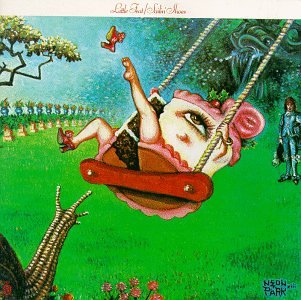
Amazing, yet fitting, if the presidency of George W. Bush is remembered in the YouTube hive mind for Bush's having shoes fired at him during a press conference in Iraq.
In the big scheme of things, I know Rick Perlstein is right and we shouldn't applaud physical assaults upon heads of state. But I was delighted to see Dubya being nearly pelted by footwear. It's quite poetic, an Iraqi using this Middle Eastern form of insult, little understood by neocon America, and previously seen directed at the toppled statue of Saddam Hussein during the early days of the U.S. invasion. There is a nice karmic symmetry to that. It's also sadly apropos that it took an Iraqi journalist to do what I kept wishing an American reporter would do in a Q&A with Bush: let loose with a burst of visceral rage at the lies and destruction.
Give the President this much credit, he did an impressive job of dodging the shoe whipped at his head from close range. It's a testament to the most unambiguous achievement of his White House career: his keeping himself physically fit.
Monday, December 01, 2008
Righteous Dahlia
Writing in Newsweek, Fareed Zakaria remarked that, in our current worldwide economic crisis, we are living history: are living through a seismic shift that will permanently alter many of the conditions of life that we’ve taken for granted. TNR’s Michael Crowley responded: gee, what about 9/11? Wasn’t that a momentous historical event, huh, Fareed? Granted, these were throwaway remarks, but Crowley’s response was small-minded. Sure, 9/11 was a major shock to many classes of Americans, with a terrible ricochet effect in Iraq and Afghanistan and elsewhere. But many people around the world were untouched by 9/11. The loss of innocent life was terrible, but not more terrible than terrorist events (some state-sponsored) in the Balkans or East Africa or other parts of the world in recent years. Meanwhile, the global financial downturn will touch just about every human being on the planet.
9/11 didn’t change everything, as some Americans have said. It was just a major wake-up call, signaling the end of American exceptionalism. As the world gets smaller, perhaps even flatter, the destinies of nations become more intertwined, more similar. None of us is that much safer than the rest. Americans' sense of ourselves as a chosen people, blessed by divine providence, or simply protected by power and geographic isolation, was brought crashing down. Tragically, in the wake of this disillusionment, we squandered our highest claim to being exceptional: our faith in inalienable human rights and the rule of law.
#
I want to thank Dahlia Lithwick for this tightly-argued, righteously angry column about the prospects of investigating and punishing the worst abuses of the U.S.’s so-called War on Terror.
I was growing resigned to the thought that, for the sake of partisan comity, the incoming Obama administration would not aggressively prosecute cases of torture and other war crimes by Bush Administration officials. Silly me. The voices of civility and seriousness and jaded moral flexibility have led down the wrong path over and over again, and the same voices haven’t suddenly become wiser just because Barack won the election.
Many liberal commentators, thinking perhaps of South Africa’s Truth and Reconciliation process after the end of apartheid rule, have argued there is a trade-off between truth-telling and legal remedies. Some propose a truth commission offering legal immunity in exchange for testimony, and Obama's leaky transition team have telegraphed some sympathy for this approach.
Lithwick demolishes this supposed trade-off.
This passage breaks my heart, but it’s so true. Who can place any real hope in the charade of a bipartisan commission? In this country, they are invariably exercises in ass-covering, with an end product that both parties can interpret to their liking. Hawks and Doves, Idealists and Realists: call the two sides what you will, it's not a dispute over facts that is the source of their differing views.
(Bullseye, Dahlia. Are we going to leave this to Harry Reid and Joe Lieberman?)
Let's face it. No one should expect Bush, Cheney, and Rumsfeld being handed over to officials in the Hague, however richly they deserve that fate, or being dragged into an American court. The GOP obviously wouldn’t stand for it, and most likely the public wouldn’t stand for it. But take someone like John Yoo. He’s not a household name. Yet he’s the author of the egregious torture memos, the fabricated fig leaf that the Bush White House used to get away with their sadistic interrogation regime. His name is mud in liberal legal circles. But Yoo is a young man, a professor in good standing at a leading law school, and I find it disturbingly easy to imagine in 10 to 20 years, when the political carousel spins around again, hearing John Yoo and Supreme Court in the same sentence.
The guys at the very top, Cabinet-level men, shielded from legal harm by their visibility, are finished in public life, permanently tarred by the Bush record of failure and dishonor. We can be relieved to that extent. But some of their lieutenants could do damage for years to come. The Obama Justice Department can’t throw up its hands in the cases of people like Yoo and David Addington. It needs to state for the public record that John Yoo implicated the people of the United States in crimes against humanity. Dubya himself is one thing. If Republicans want to argue that John Yoo is above the Geneva Conventions, well, bring it on.
9/11 didn’t change everything, as some Americans have said. It was just a major wake-up call, signaling the end of American exceptionalism. As the world gets smaller, perhaps even flatter, the destinies of nations become more intertwined, more similar. None of us is that much safer than the rest. Americans' sense of ourselves as a chosen people, blessed by divine providence, or simply protected by power and geographic isolation, was brought crashing down. Tragically, in the wake of this disillusionment, we squandered our highest claim to being exceptional: our faith in inalienable human rights and the rule of law.
#
I want to thank Dahlia Lithwick for this tightly-argued, righteously angry column about the prospects of investigating and punishing the worst abuses of the U.S.’s so-called War on Terror.
I was growing resigned to the thought that, for the sake of partisan comity, the incoming Obama administration would not aggressively prosecute cases of torture and other war crimes by Bush Administration officials. Silly me. The voices of civility and seriousness and jaded moral flexibility have led down the wrong path over and over again, and the same voices haven’t suddenly become wiser just because Barack won the election.
Many liberal commentators, thinking perhaps of South Africa’s Truth and Reconciliation process after the end of apartheid rule, have argued there is a trade-off between truth-telling and legal remedies. Some propose a truth commission offering legal immunity in exchange for testimony, and Obama's leaky transition team have telegraphed some sympathy for this approach.
Lithwick demolishes this supposed trade-off.
…I just cannot bring myself to believe that the full story will ever be told to our collective satisfaction. Even if every living American were someday to purchase and read the truth commission's collectively agreed-on bipartisan narrative, weaving together John Yoo's best intentions and Khalid Sheikh Mohammed's torment on the water board, sweeping national reconciliation will elude us.
This passage breaks my heart, but it’s so true. Who can place any real hope in the charade of a bipartisan commission? In this country, they are invariably exercises in ass-covering, with an end product that both parties can interpret to their liking. Hawks and Doves, Idealists and Realists: call the two sides what you will, it's not a dispute over facts that is the source of their differing views.
…[W]e already know the truth of what happened… We may not have every memo, and we may not be able to name every name. But do truth commissions alone ever reveal the full story? If we decline to hold lawbreakers to account, we may find out a whole lot of facts and arrive at no truth at all. Is the truth that if the president orders it, it isn't illegal? Or is the truth that good people do bad things in wartime, but that's OK? Is the truth that if we torture strange men with strange names, it's not lawbreaking? What legal precedent will this big bipartisan narrative set for the next president with a hankering for dunking prisoners?
…It seems that after 9/11, the solution to the problem of too much law was to simply do away with the stuff. And the solution to the lawlessness that followed 9/11? Do away with any legal consequences for the perpetrators. If there exists a more perverse method of restoring the rule of law in America than announcing that legal instruments are inadequate to address them, I can't imagine it.
…Nobody is suggesting that those who authorized torture and wiretapping were sadists or brutes. But they did a lot worse than mix stripes and plaids. They broke the law. They violated domestic and international laws, and they committed war crimes. They did so deliberately and with the "cover" of cynically bad legal memoranda. And those who have been entrusted as the nation's top law enforcers now claim that public disapproval is punishment enough.
…[As we try to imagine] a perfect truth commission or a perfect congressional inquiry (done by a perfect Congress that had suddenly grown a perfect spine),
(Bullseye, Dahlia. Are we going to leave this to Harry Reid and Joe Lieberman?)
it occurs to me yet again that we already have a pretty perfect system for investigating terrible wrongdoing and punishing wrongdoers. And we call it the justice system for a reason. For eight years we've been told, time and again, that the U.S. courts just aren't good enough to try terrorists, and that they aren't smart enough to monitor wiretapping, and that they aren't capable of keeping state secrets. Anyone who believes they are also not good enough to investigate government lawbreaking might reasonably be asked what's changed.Not that anybody asked me, but I would suggest that sadists and brutes were making policy with respect to torture and eavesdropping. We persisted for so long in inhumane interrogation methods that were plainly illegal, and plainly ineffective at getting accurate evidence, that the only rationales are (1) the pursuit of brutal pre-ordained "intelligence findings," or (2) the fact that somebody or -bodies liked the way it felt, being an all-powerful ruthless inquisitor. But we have such a terrible time in our culture separating the criminal from the crime. We can accept that a leering jarhead holding a dog leash is a torturer. We have trouble accepting that a man in a Savile Row suit might be one as well.
Let's face it. No one should expect Bush, Cheney, and Rumsfeld being handed over to officials in the Hague, however richly they deserve that fate, or being dragged into an American court. The GOP obviously wouldn’t stand for it, and most likely the public wouldn’t stand for it. But take someone like John Yoo. He’s not a household name. Yet he’s the author of the egregious torture memos, the fabricated fig leaf that the Bush White House used to get away with their sadistic interrogation regime. His name is mud in liberal legal circles. But Yoo is a young man, a professor in good standing at a leading law school, and I find it disturbingly easy to imagine in 10 to 20 years, when the political carousel spins around again, hearing John Yoo and Supreme Court in the same sentence.
The guys at the very top, Cabinet-level men, shielded from legal harm by their visibility, are finished in public life, permanently tarred by the Bush record of failure and dishonor. We can be relieved to that extent. But some of their lieutenants could do damage for years to come. The Obama Justice Department can’t throw up its hands in the cases of people like Yoo and David Addington. It needs to state for the public record that John Yoo implicated the people of the United States in crimes against humanity. Dubya himself is one thing. If Republicans want to argue that John Yoo is above the Geneva Conventions, well, bring it on.
Friday, November 21, 2008
Drive-by
What good is getting our first African-American president if I can't get a blog post out of it? All I can say at the moment is, I always seem to have more to say about politics when I'm unhappy with how things are going than when I'm satisfied and hopeful.
Here at least is something on the economy: Michael Lewis in Portfolio magazine, on the end of Wall Street as we know it. I'll grade myself on a curve and say I understand about 2/3 of this piece. To me Michael Lewis will always be first and foremost the author of Moneyball, the story of the rise of stats gurus in the management ranks of major league baseball, and a trademark Michael Lewis tone and attitude are evident in both pieces of writing. Moneyball's prophet/cynic Billy Beane is a lot like Steve Eisman in the Portfolio article, the short-selling artist who got rich while foretelling the destruction of the investment banking industry. Lewis humanizes the financial disaster nicely in the part depicting Eisman and his colleagues, on the day the roof came crashing in, watching people on the street in lower Manhattan, knowing their work and vision has been vindicated while feeling the rumble of a Biblical wave of destruction, something like Yahweh's vengeance wreaked on a slack and heedless people. Also interesting is the final scene, Lewis's pleasure or fascination in the company of a charming monster, John Gutfreund, morally repugnant yet proud.
Here at least is something on the economy: Michael Lewis in Portfolio magazine, on the end of Wall Street as we know it. I'll grade myself on a curve and say I understand about 2/3 of this piece. To me Michael Lewis will always be first and foremost the author of Moneyball, the story of the rise of stats gurus in the management ranks of major league baseball, and a trademark Michael Lewis tone and attitude are evident in both pieces of writing. Moneyball's prophet/cynic Billy Beane is a lot like Steve Eisman in the Portfolio article, the short-selling artist who got rich while foretelling the destruction of the investment banking industry. Lewis humanizes the financial disaster nicely in the part depicting Eisman and his colleagues, on the day the roof came crashing in, watching people on the street in lower Manhattan, knowing their work and vision has been vindicated while feeling the rumble of a Biblical wave of destruction, something like Yahweh's vengeance wreaked on a slack and heedless people. Also interesting is the final scene, Lewis's pleasure or fascination in the company of a charming monster, John Gutfreund, morally repugnant yet proud.
Tuesday, November 04, 2008
“Rock On”

(The parting instructions of the Democratic Party poll greeter at my district this morning)
Nothing left to do but watch the returns. The thing about this presidential campaign is, it’s been evident that Obama had the lead and the inside track since late September: since the economic/bailout crisis and McCain’s spastic response to it. So for Democrats, the last month has been an exercise in not jinxing anything, not counting chickens before they hatch. From a practical aspect, of course, Obama’s campaign didn’t want anyone becoming complacent or relaxing, but there’s been a superstitious aspect to it as well: not believing our luck, and fearing that vocalizing would cause it to vanish. Like a baseball dugout where the pitcher is working on a no-hitter. Five weeks of biting one’s tongue produces a weird tension and slightly frenzied mental state.
See here: an Ezra Klein e-mailer fearing “the gods of overconfidence”.
See also here: my favorite schmuck media-head, John Dickerson of Slate, is full of concern for all the pollsters and politicos who will look bad if Obama doesn’t win.
More later.
Subscribe to:
Posts (Atom)


